Quality & documents · Specifications
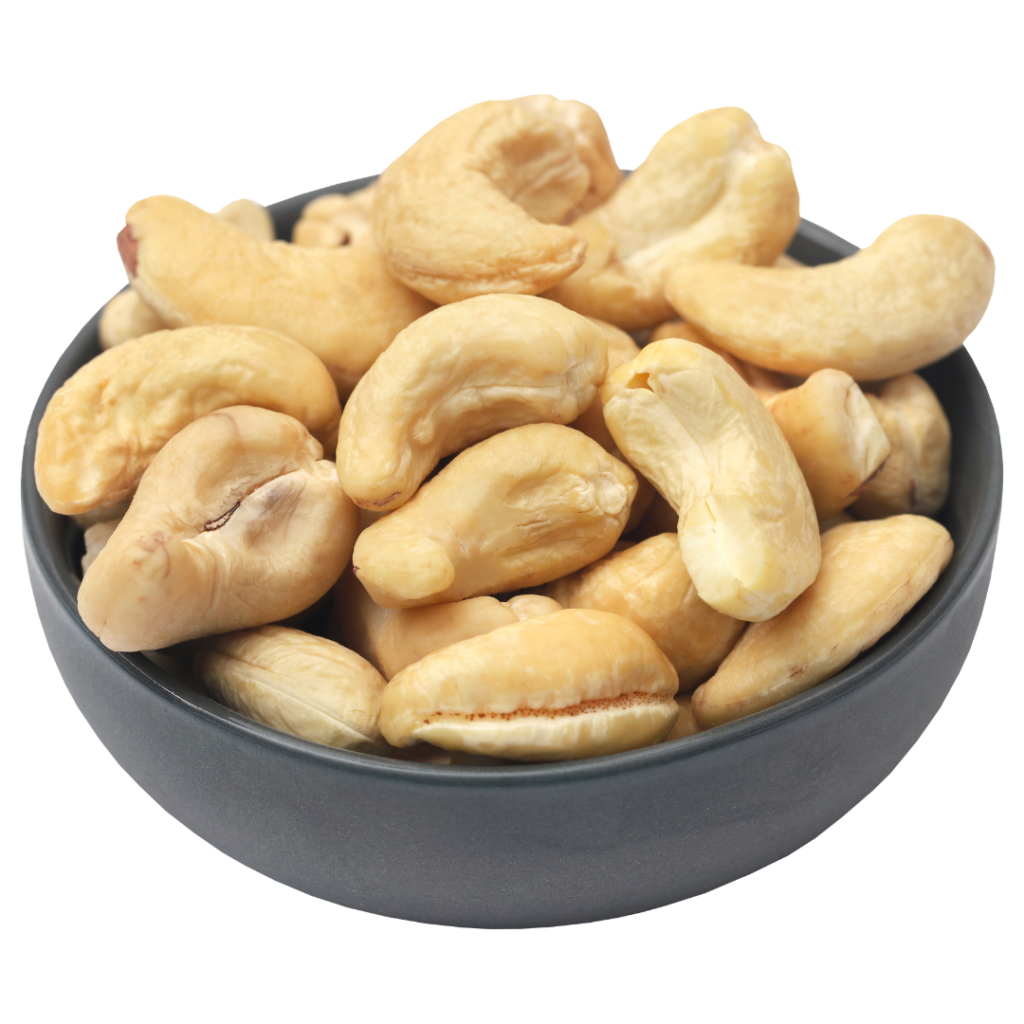
White whole cashew kernels: WW160 to WW450
Peeled whole cashew kernels, graded by size (count per pound) and offered in four quality levels. Choose the grade and the level that match your market, then confirm both in the quotation and the contract.
- 7 grades, WW160 to WW450
- 4 quality levels
- Moisture ≤ 5.0%
- Shelf life 12 months
Grades and kernel counts
| Grade | Kernels per lb | Kernels per kg (approx.) | Basis |
|---|---|---|---|
| WW160 | 150–160 | 331–353 | Le Duong grade (not defined by AFI) |
| WW170 | 160–170 | 353–375 | Le Duong grade (not defined by AFI) |
| WW180 | 170–180 | 375–397 | AFI W-180 range |
| WW210 | 200–210 | 441–463 | AFI W-210 range |
| WW240 | 220–240 | 485–529 | AFI W-240 range |
| WW320 | 300–320 | 661–705 | AFI W-320 range |
| WW450 | 400–450 | 882–992 | AFI W-450 range |
Counts per kilogram are converted from the counts per pound (1 kg = 2.2046 lb) and rounded.
Requirements common to all levels
Moisture
≤ 5.0%.
Freshness
Free fatty acids: ≤ 1.0% (as oleic acid). Peroxide value: ≤ 2 meq O₂/kg fat.
Appearance
White to pale ivory, clean, free from live insects, mould and foreign matter; no rancid or foreign odour.
Allergen and product status
Contains tree nuts (cashew). Non-GMO. Not irradiated unless agreed in writing.
Microbiological criteria, contaminants, intended use, sampling and acceptance: see Cashew kernel specifications.
Quality levels: Orchid, Lotus, Jasmine and Daisy
These are Le Duong Cashew's commercial quality levels, not AFI grades. They describe how uniform the kernels are and how many kernels may carry small knife marks. Moisture, broken kernels, lower size and total defects are maximum values by weight; the knife-mark shares in the Appearance column are approximate shares of the kernels, by count.
Orchid
Bright, uniform colour and size; fully machine-processed; premium level.
- ≤ 10% lower size
- ≤ 12% total defects
- Within the grade range kernel count
Lotus
Uniform size and colour; about 35–50% of kernels may show small, faint knife marks.
- ≤ 15% lower size
- ≤ 15% total defects
- 20 kernels/lb below the grade maximum, or the grade range if wider
Jasmine
Uniform size and colour; 80–100% of kernels may show knife marks; value price.
- ≤ 20% lower size
- ≤ 20% total defects
- 20 kernels/lb below the grade maximum, or the grade range if wider
Daisy
Uniform size and colour; 80–100% of kernels may show knife marks; economy price.
- ≤ 20% lower size
- ≤ 20% total defects
- 40 kernels/lb below the grade maximum, or the grade range if wider
Full specification of the levels
| Level | Moisture | Broken kernels | Kernel count | Lower size | Total defects | Appearance |
|---|---|---|---|---|---|---|
| Orchid | ≤ 5% | ≤ 10% | Within the grade range | ≤ 10% | ≤ 12% | Bright, uniform colour and size; fully machine-processed; premium level. |
| Lotus | ≤ 5% | ≤ 10% | Grade range, or from 20 kernels/lb below the grade maximum up to the maximum, whichever is wider | ≤ 15% | ≤ 15% | Uniform size and colour; about 35–50% of kernels may show small, faint knife marks. |
| Jasmine | ≤ 5% | ≤ 10% | Grade range, or from 20 kernels/lb below the grade maximum up to the maximum, whichever is wider | ≤ 20% | ≤ 20% | Uniform size and colour; 80–100% of kernels may show knife marks; value price. |
| Daisy | ≤ 5% | ≤ 10% | Grade range, or from 40 kernels/lb below the grade maximum up to the maximum, whichever is wider | ≤ 20% | ≤ 20% | Uniform size and colour; 80–100% of kernels may show knife marks; economy price. |
Examples: WW210: Orchid 200–210 kernels/lb, Lotus and Jasmine 190–210, Daisy 170–210. WW320: Orchid, Lotus and Jasmine 300–320, Daisy 280–320. WW450: all four levels 400–450. No level allows more kernels per pound than the grade maximum.
- Broken kernels
- Kernels with more than one-eighth of the kernel broken off. A kernel with a smaller part broken off still counts as whole.
- Lower size
- Whole kernels of the next smaller grade.
- Total defects
- All kernels with minor defects counted together, such as light scorching, light speckles or slight shrivelling. Knife marks within the share stated for the level are not counted as defects. For white whole kernels ordered at one of these levels, this limit takes the place of the AQL rule for minor defects. Insect damage, mould, rancidity and severe scorching are not covered by this tolerance: they are major or critical defects under the sampling and acceptance rules in Cashew kernel specifications.
Orders can also be produced to the AFI specification or to your own specification. The contract states which one applies.
Packing and shelf life
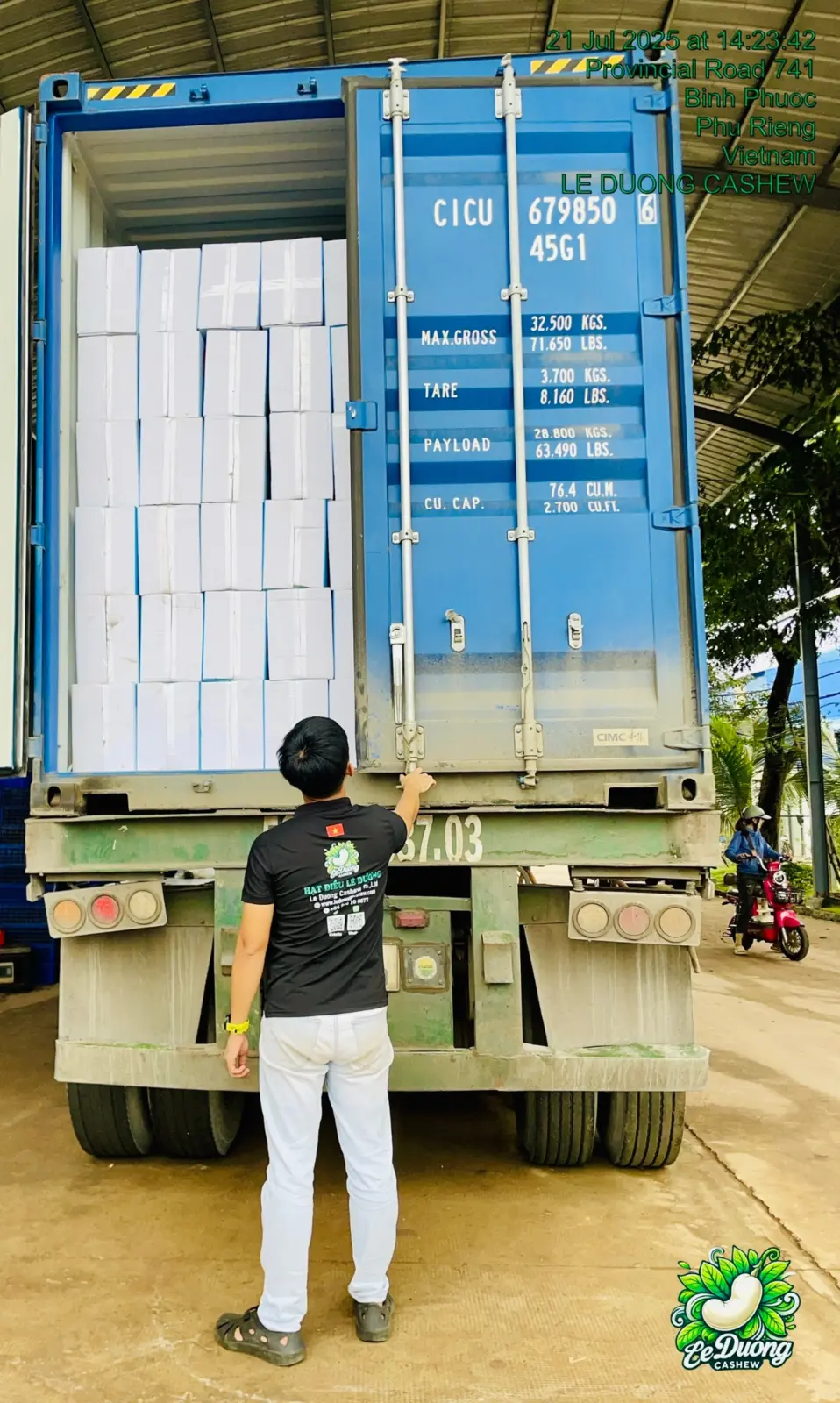
- 2 × 10 kg or 2 × 11.34 kg vacuum PE bags per carton, one 22.68 kg vacuum bag per carton, or tins; nitrogen flushing optional.
- Shelf life: 12 months from the packing date in intact packaging stored at or below 20 °C and below 65% relative humidity, away from sunlight and strong odours.
Carton sizes and container loads: Export packing and container loading.
Not sure which level fits your market? Tell us your channel (retail, repacking or food manufacturing) and destination, and we will recommend a grade and level, with photos and samples.
Request a quotation or see the sample policy.
Version 1.0, effective from the publication date. The signed sales contract and its approved specification prevail for each order.


