Quality & documents
Cashew kernel specifications
Reference specifications for the cashew kernels Le Duong Cashew processes and exports from Dong Nai, Vietnam: white wholes, splits and pieces, raw kernels with testa and salt-roasted kernels with testa. Every order is produced and inspected against the specification approved in its sales contract.
- 4 product families
- Moisture ≤ 5.0% for white kernels
- Salmonella absent in 25 g
- Shelf life 12 months
Product families and grade codes
WW160–WW450
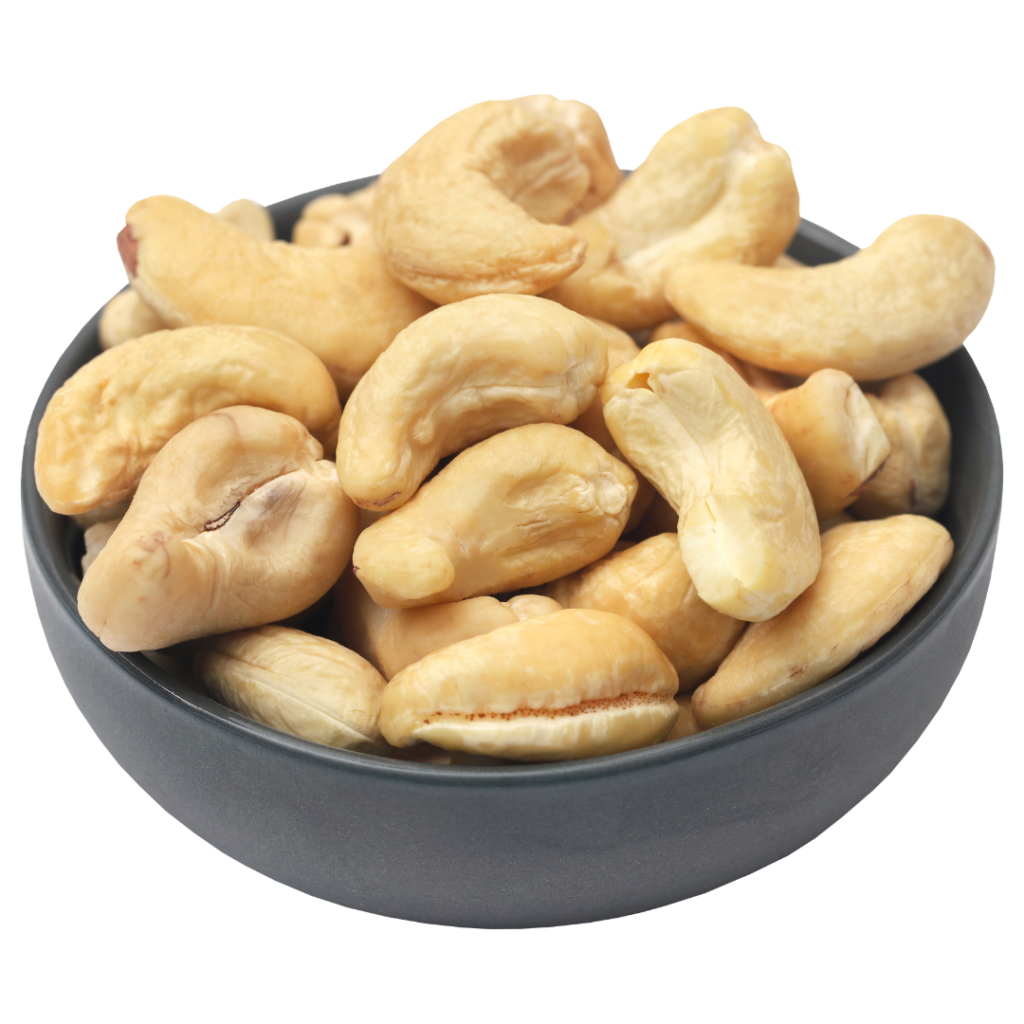
White whole kernels
Peeled whole kernels, graded by count per pound
Details: White whole specification
WS, LP
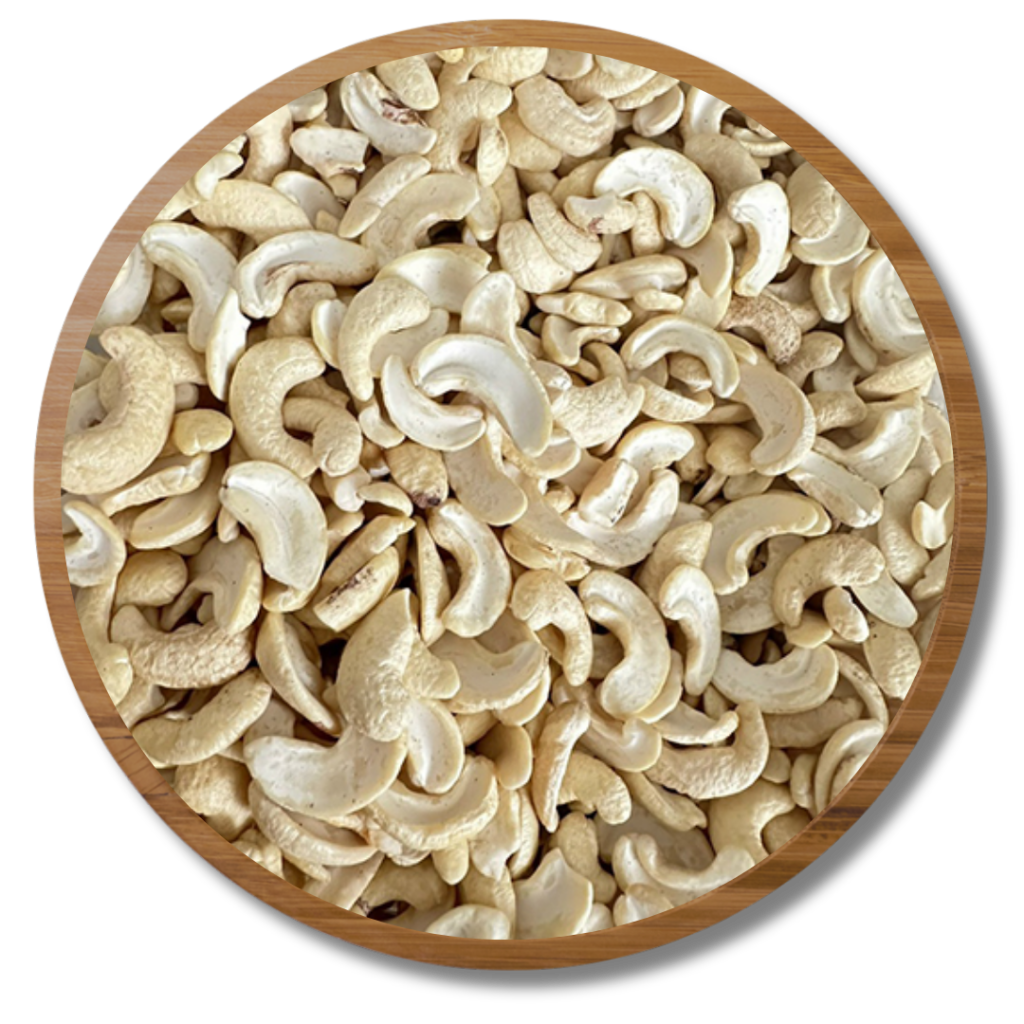
White splits, large pieces
Peeled broken grades for roasting and manufacturing
Details: Splits and pieces specification
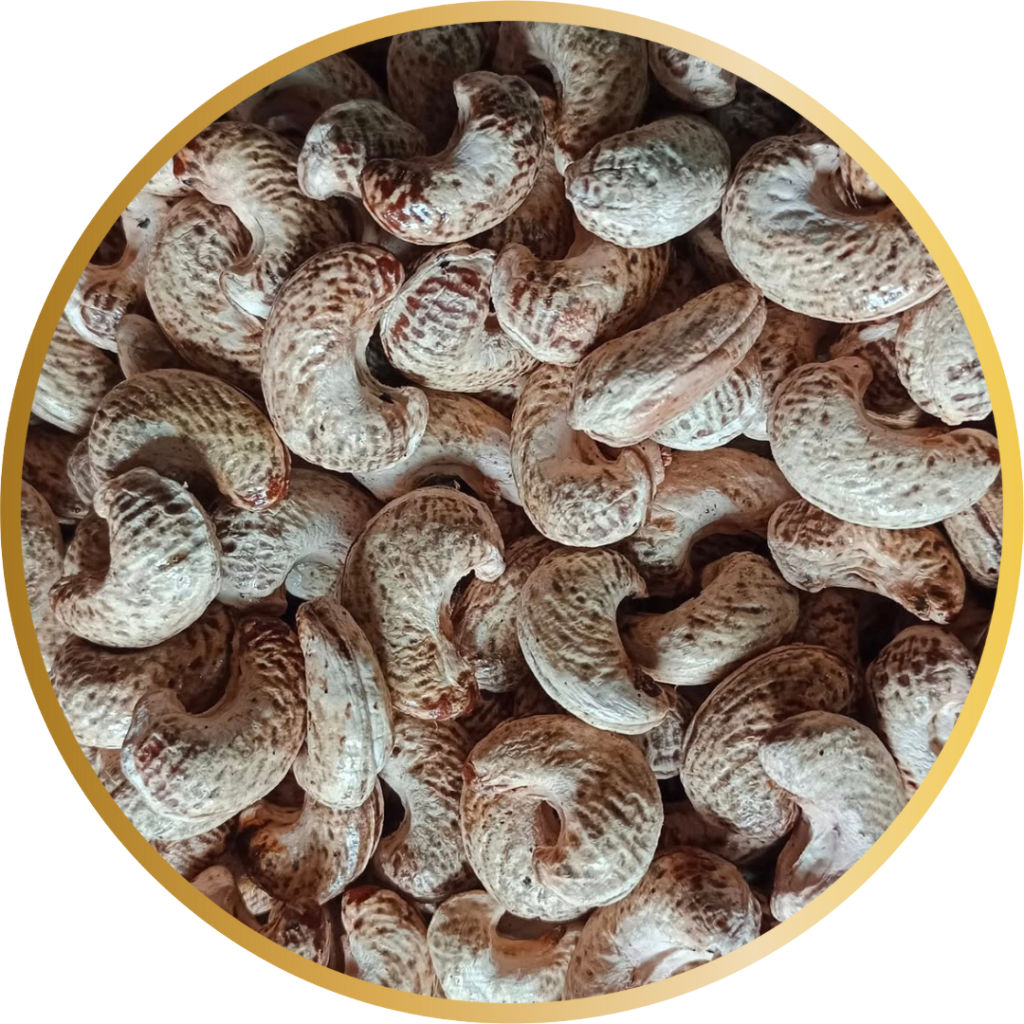
WA160–WA320
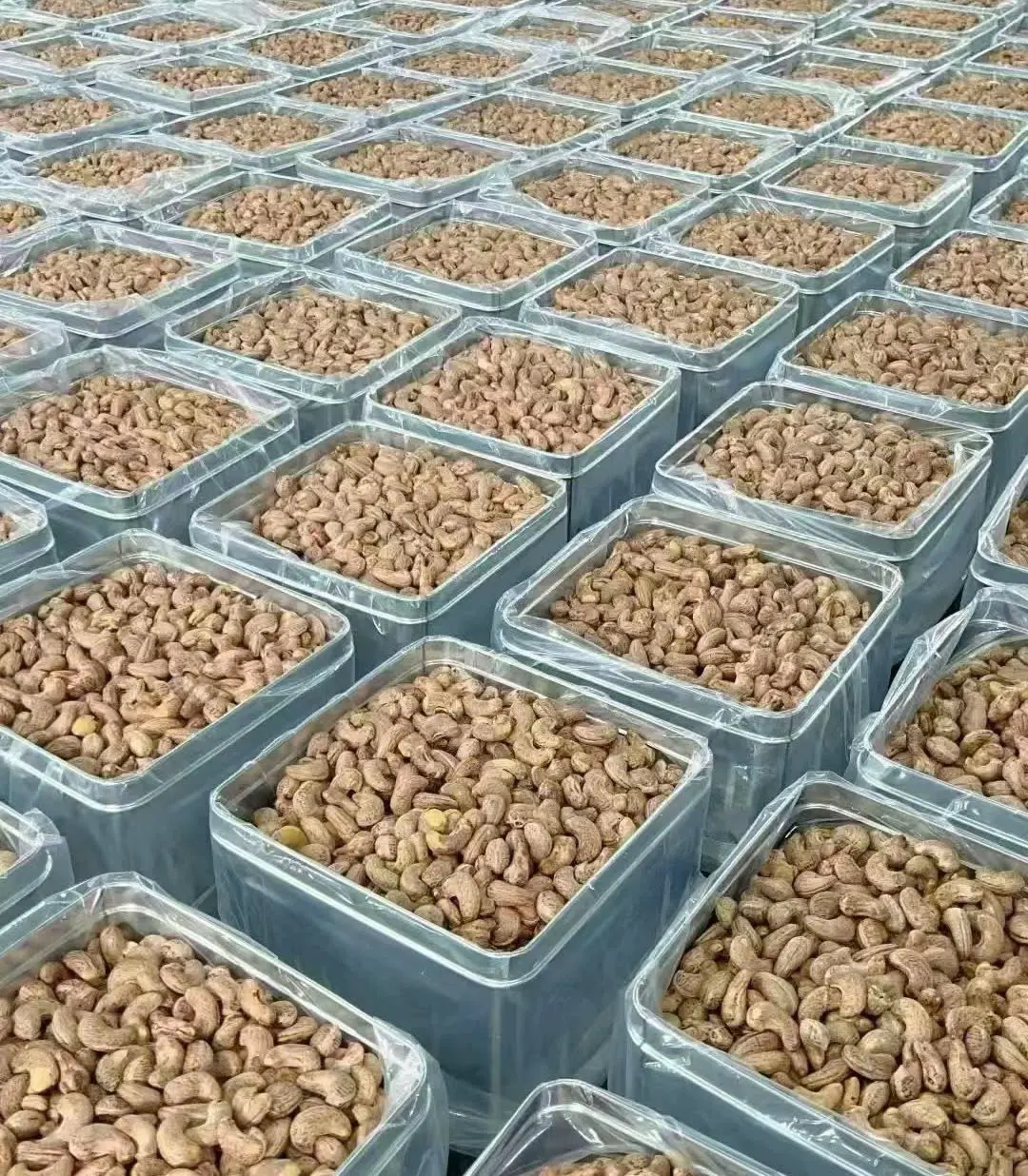
Raw kernels with testa
Unroasted, unsalted whole kernels that keep the natural brown skin
Details: On this page
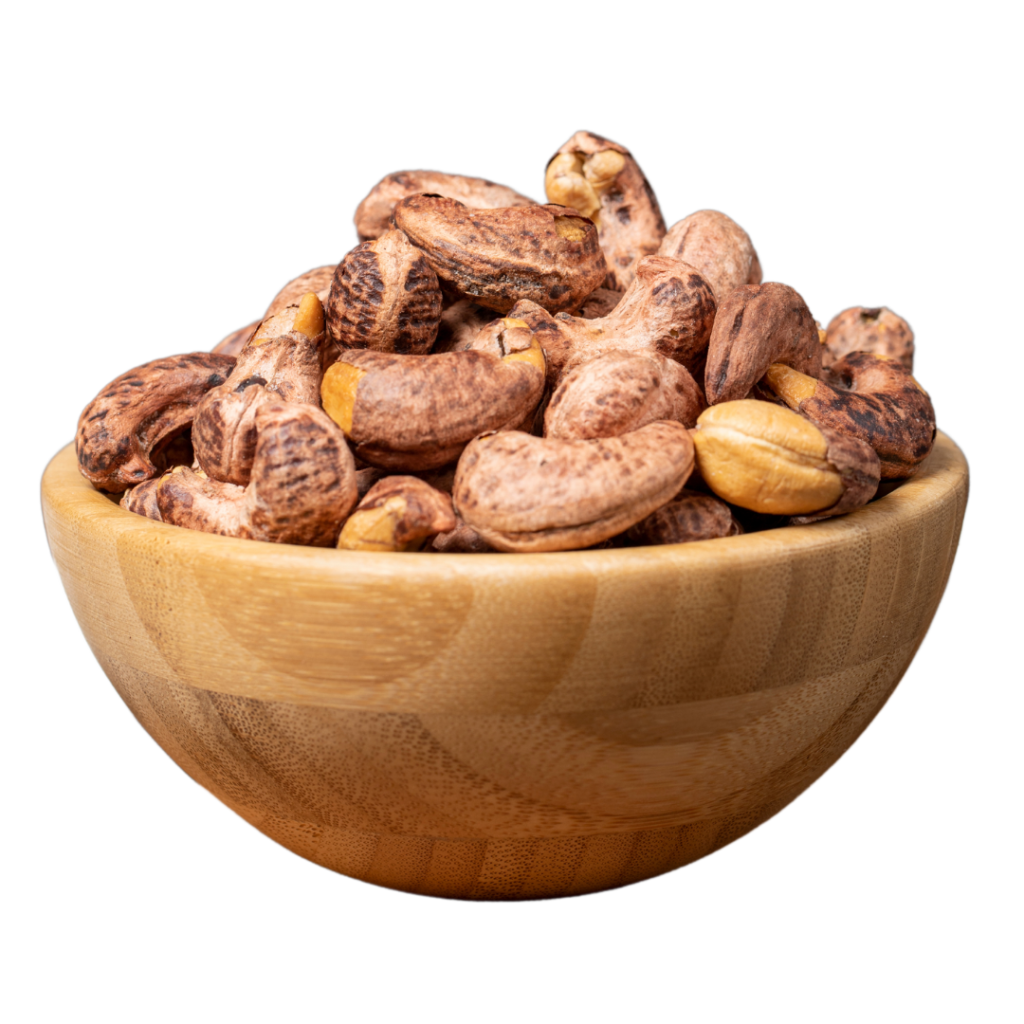
A160–A450
Salt-roasted kernels with testa
Whole kernels with testa, roasted and salted
Details: Salt-roasted specification
Reading a grade code
The number in a grade code is the maximum number of kernels per pound (lb); for A grades it refers to the kernels as graded before roasting. WW320, for example, means no more than 320 kernels per pound.
General quality of white kernels (WW, WS, LP)
Appearance
White to pale ivory, clean and characteristic; free from live insects, mould and foreign matter.
Odour and taste
Fresh cashew character; no rancid, musty or foreign odour.
Moisture
≤ 5.0%.
Freshness
Free fatty acids: ≤ 1.0% (as oleic acid). Peroxide value: ≤ 2 meq O₂/kg fat.
Raw kernels with testa (WA)
Whole kernels that keep the testa (the natural brown skin), unroasted and unsalted. Depending on your application, they are used directly or processed further, for example roasted.
With testa WA and A grades keep itPeeled WW, WS and LP| Code | Kernels per lb | Kernels per kg (approx.) |
|---|---|---|
| WA160 | 150–160 | 331–353 |
| WA170 | 160–170 | 353–375 |
| WA180 | 170–180 | 375–397 |
| WA210 | 200–210 | 441–463 |
| WA240 | 220–240 | 485–529 |
| WA320 | 300–320 | 661–705 |
WA grades use the count ranges of the white whole grades with the same number. WA160 and WA170, like WW160 and WW170, are Le Duong grades; the other ranges follow the AFI white whole grades.
- ≤ 8.5% Moisture
- ≤ 1.0% Free fatty acids
- ≤ 2 meq O₂/kg fat Peroxide value
Packing
2 × 10 kg or 2 × 11.34 kg vacuum PE bags per carton; nitrogen flushing optional; staple-free cartons.
Shipping
Raw kernels with testa carry more moisture (up to 8.5%). When the goods will stay in the container for more than 10 days, we recommend a reefer container; on short routes, such as to China, dry containers are normally used.
Intended use: see Allergen and product status.
Microbiological criteria
- Absent in 25 g Salmonella, all product families
- < 10 CFU/g E. coli, all product families
| Parameter | White wholes, splits and pieces | Raw with testa (WA) | Salt-roasted with testa (A) |
|---|---|---|---|
| Total plate count | ≤ 1 × 10⁵ CFU/g | As agreed in the contract | ≤ 1 × 10⁴ CFU/g |
| Yeasts and moulds | ≤ 1 × 10³ CFU/g | As agreed in the contract | ≤ 1 × 10² CFU/g |
| E. coli | < 10 CFU/g | < 10 CFU/g | < 10 CFU/g |
| Salmonella | Absent in 25 g | Absent in 25 g | Absent in 25 g |
Contaminants and residues
Aflatoxins
- 2.0 µg/kg aflatoxin B1, EU example
- 4.0 µg/kg total aflatoxins, EU example
Within the legal limits of the importing country. In the EU, Regulation (EU) 2023/915 applies, for example 2.0 µg/kg aflatoxin B1 and 4.0 µg/kg total aflatoxins for cashew kernels placed on the market for the final consumer or used as an ingredient in food.
Pesticide residues
Within the maximum residue limits of the importing country.
Heavy metals
Risk-based monitoring and compliance with the importing country's limits.
Testing scope and certificates
The testing scope, limits of quantification and certificates for each order are set in the contract. See Laboratory testing.
Allergen and product status
Composition
100% cashew kernels (salt-roasted kernels: cashew kernels and salt; they are roasted in hot salt, without oil).
Allergen
Contains tree nuts (cashew).
GMO and irradiation
Non-GMO cashew kernels. Not irradiated unless agreed in writing.
Intended use
White kernels (WW, WS, LP) and raw kernels with testa (WA) are not roasted. Depending on your application, they are used directly or processed further, for example roasted; the intended use and the microbiological criteria that apply to it are stated in the contract.
Sampling and acceptance (AQL)
Lots are sampled under ANSI/ASQ Z1.4 (equivalent to ISO 2859-1), general inspection level II, with a composite sample of at least 500 g.
- AQL 0 Critical defects
- AQL 1.5 Major defects
- AQL 4.0 Minor defects
Defect class
Critical
Examples: Live insects, visible mould, glass, metal or plastic fragments, toxic or chemical contamination, other nut species
Decision: Any critical defect rejects the lot
Defect class
Major
Examples: Rancid or oxidised kernels, severe scorching, deep insect damage, serious decay, internal mould, moisture above specification (white kernels > 5.0%, raw with testa > 8.5%, roasted with testa > 3.0%)
Decision: Rejected if major defects exceed the acceptance number
Defect class
Minor
Examples: Slight scrape marks (other than the knife marks a white whole quality level allows), light speckles, superficial blemishes, slight shrivelling, minor colour variation that does not affect safety
Decision: Rejected if minor defects exceed the acceptance number. For white whole kernels ordered at an Orchid, Lotus, Jasmine or Daisy level, minor defects are judged against that level's total-defects limit instead (see White whole kernels)
Packing, storage and shelf life
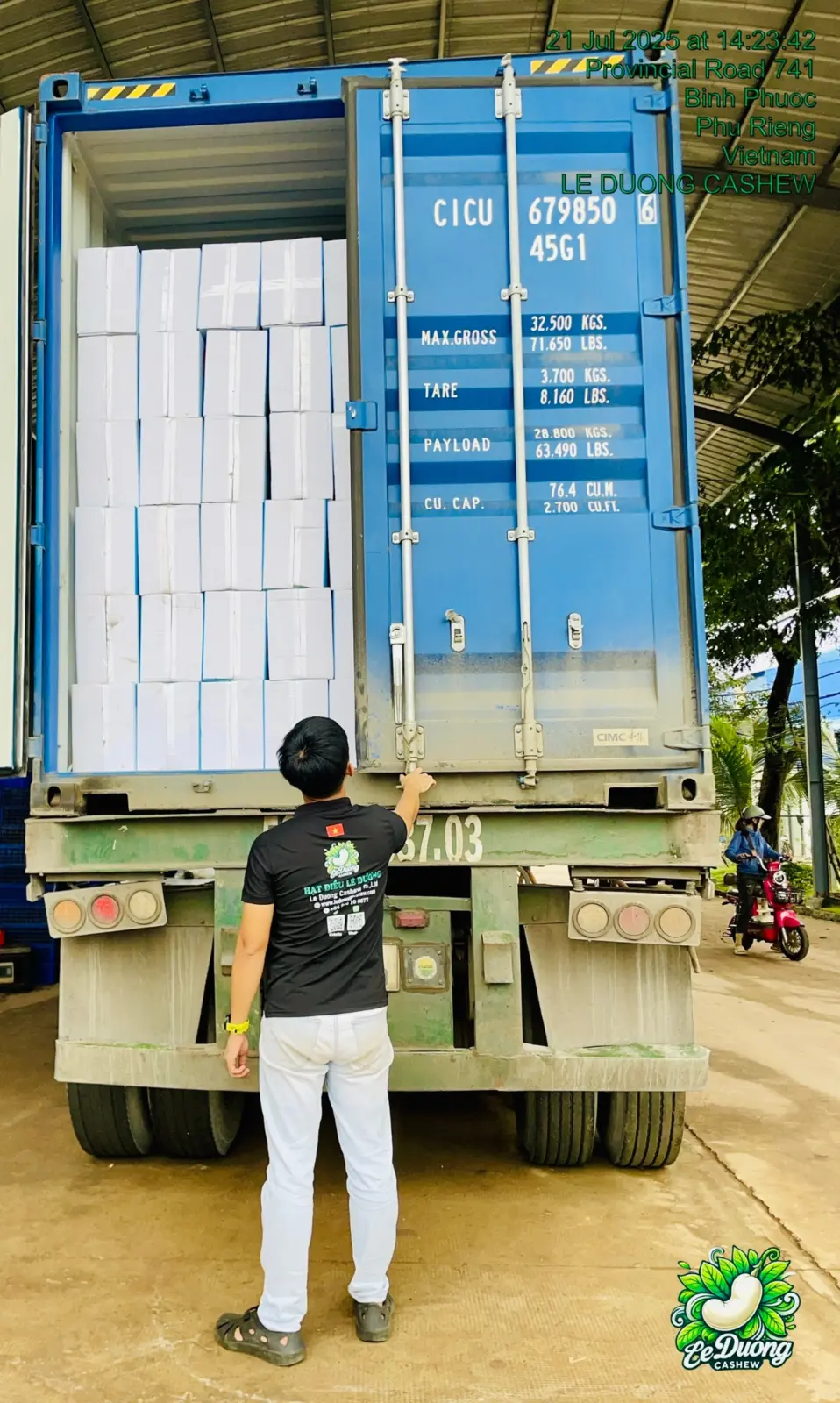
- Standard packing: 2 × 10 kg or 2 × 11.34 kg vacuum PE bags per carton, or one 22.68 kg vacuum bag; tins on request; nitrogen flushing optional. Export cartons are clean, dry and staple-free, with a bursting strength of at least 200 lb/in² (200 lb test, about 1,380 kPa). See Export packing and container loading.
- Storage: at or below 20 °C and below 65% relative humidity (below 60% for salt-roasted kernels), dry, away from sunlight and strong odours. Reseal after opening.
- Shelf life: 12 months from the packing date in intact packaging stored as above.
- 12 months Shelf life
- ≤ 20 °C Storage
- < 65% Relative humidity (below 60% for salt-roasted kernels)
Labelling
Each carton shows the product and grade code, net weight, lot or batch code, packing and best-before dates, storage conditions, and the origin as stated in the contract (and on the certificate of origin, when one is issued); for the salt-roasted series, also the raw cashew nut origin next to the series name. Destination information is added when requested.
Glossary
- FFA (free fatty acids)
- Indicator of hydrolytic rancidity, expressed as % oleic acid. Lower values mean fresher kernels.
- PV (peroxide value)
- Indicator of early oxidation, in meq O₂/kg fat. Lower values mean fresher kernels.
- TPC, yeasts and moulds
- Total plate count and yeast and mould counts, used as hygiene indicators.
- Testa
- The natural brown skin of the kernel. WA and A grades keep it; WW, WS and LP are peeled.
- AQL
- Acceptance quality limit: the defect level a sampling plan accepts for a lot.
Need a specification for a specific order? We confirm the exact specification in the quotation and the contract, and send the signed version by email from an @leduongcashew.com address.
Request a quotation or write to sales@leduongcashew.com · WhatsApp +84 886 10 66 77
Version 1.0, effective from the publication date. These are reference specifications; the signed sales contract and its approved specification prevail for each order.


