
Cashew kernel specifications are not created by geography alone. A shipment must satisfy three separate layers: the destination country’s law, the commercial grade or industry standard written into the contract, and the buyer’s own application requirements. Mixing these layers is a common cause of rejected offers and avoidable claims.
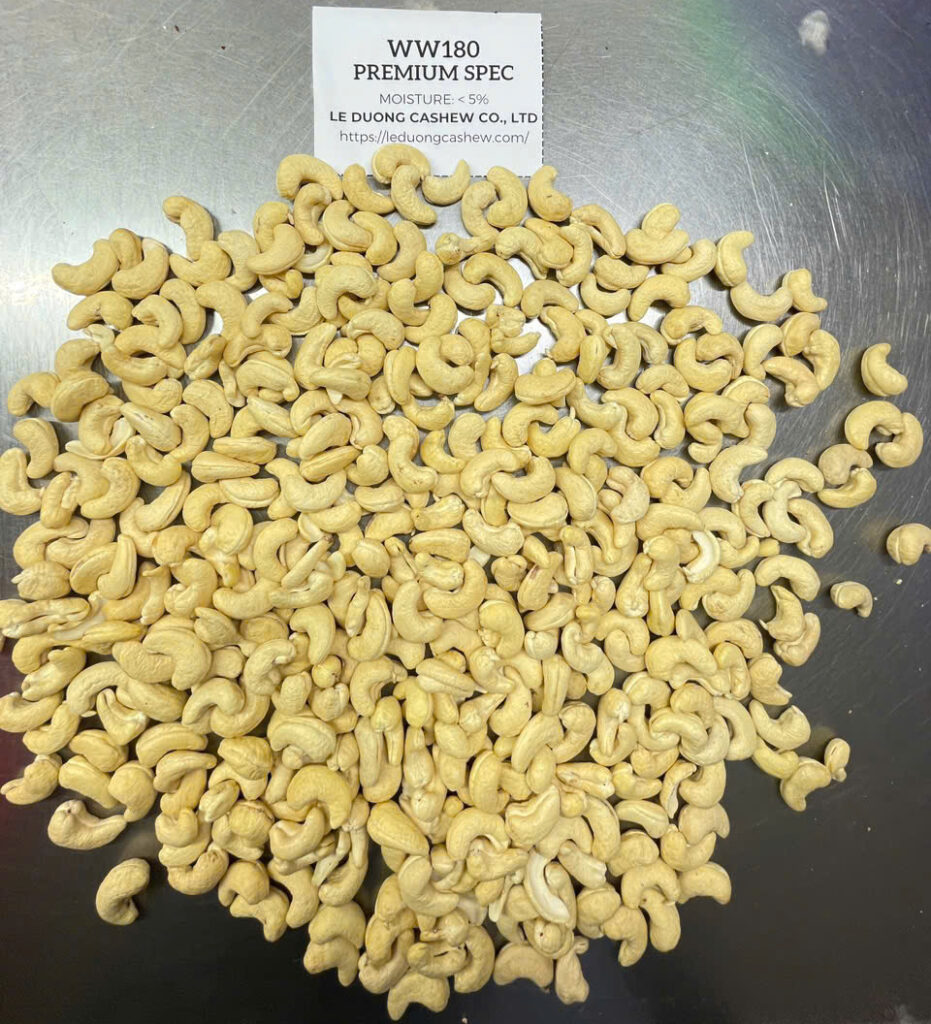
For example, WW320 is a commercial size-grade description; it is not an EU, FDA or GACC product approval. Likewise, the Association of Food Industries (AFI) specification is a widely used industry reference for cashew kernels, but AFI itself states that its standards should not be confused with government standards.
Legal requirement, industry standard or buyer preference?
| Layer | What it controls | Who decides | Contract treatment |
|---|---|---|---|
| Law and import control | Food safety, contaminants, pesticide residues, facility or importer registration, labelling and border documentation | Destination authorities | Mandatory; verify the current rule and product scope before shipment |
| Industry or trade standard | Grade names, sizing, tolerances, sampling and common quality language | Trade bodies and industry practice | Binding only when incorporated into the contract or specification |
| Buyer specification | Moisture, colour, broken percentage, defects, packing, oil or seasoning, test panel and application-specific limits | Buyer and seller by written agreement | State the exact limit, method, sample and claim procedure |
Market comparison for B2B cashew buyers
The commercial preferences below are common buying patterns, not legal limits and not guarantees for every customer. Each importer must confirm the current destination requirements for the exact product: raw or roasted, bulk ingredient or retail-ready pack.
| Market | Common commercial discussion | Regulatory and compliance focus | Confirm before contract |
|---|---|---|---|
| United States | AFI grade language is commonly used for whole, split and piece tolerances; buyers may add stricter colour or defect limits | FDA food facility registration where applicable, prior notice, importer FSVP responsibilities, food safety and labelling | AFI edition, test methods, FSVP information request, retail-label responsibility and importer of record |
| European Union | Grade and appearance remain contractual; industrial users may prioritise consistency and process yield over presentation size | Current contaminant limits, pesticide MRLs, traceability, hygiene and food-information rules including allergen declaration for retail food | Whether the nuts are for further sorting/processing or final consumer use, required laboratory scope, label owner and destination member state |
| China | Large whole grades and uniform light colour are often requested for premium retail and gifting, but each buyer sets its own acceptance limits | Current GACC overseas-manufacturer registration scope, Chinese national food-safety and labelling rules, and importer clearance requirements | GACC/CIFER status for the exact product category, Chinese label approval, port, test panel and whether bulk or retail packed |
| GCC and wider Middle East | Whole grades, roasted formats and pack sizes vary widely by retail, wholesale, food-service and re-export channel | There is no single “Middle East specification”; the importing country’s registration, labelling, food-safety and customs requirements apply | Destination authority, local importer, language and label approval, shelf-life method, Halal requirement if applicable, and product registration |
What every cashew specification should contain
1. Product identity and grade
State whether the product is white whole, scorched, split, piece, raw with testa or salt-roasted with testa. For whole grades, state the sizing basis and tolerance. Avoid relying on a product name alone.
2. Physical and sensory limits
Define moisture, broken percentage, colour, serious and minor defects, foreign matter, infestation, blocking, odour and flavour. Write numeric limits where needed and identify whether the result is assessed by weight, count or another method.
3. Food-safety and chemical criteria
Build the test panel from destination law and a documented hazard assessment. Depending on product and market, this may include microbiological hazards, aflatoxins or other contaminants, pesticide residues, allergen controls and processing-oil requirements. A laboratory report for one sample does not certify every future lot.
4. Sampling and test method
A limit without a sampling rule can still create disputes. State who samples, when the sample is drawn, sample size, laboratory competence, method, retention period and which result governs if two laboratories disagree.
5. Packaging, label and shelf life
Confirm net weight, inner material, vacuum or gas-flush requirement, carton strength, coding, production and expiry format, storage statement, palletisation and destination-language label. Retail and bulk packs may follow different rules.
6. Inspection and claims
Define the inspection point, time allowed after arrival, seal-opening evidence, required photographs or video, independent survey procedure and remedy. Commercial acceptance should not be left to an undefined visual opinion after the goods have been distributed.
AFI specification: useful, but not government approval
The AFI Specifications for Cashew Kernels provide recognised trade language for sizing and tolerances. AFI’s own Food Standards page clarifies that these are industry-approved standards and should not be confused with FDA or USDA rules. Buyers and sellers should name the applicable AFI version in the contract instead of writing only “AFI quality”.
Regulatory checkpoints by destination
- United States: FDA explains the import framework, facility registration and prior notice on its Importing Food Products page. Importers subject to the rule must maintain an appropriate Foreign Supplier Verification Program.
- European Union: check the current consolidated texts for maximum levels for contaminants, pesticide maximum residue levels and food information to consumers.
- China: verify the current product-category and overseas-manufacturer requirements through the General Administration of Customs of China and the Chinese importer. Do not rely on an old summary of superseded registration rules.
- Cross-market hygiene: the Codex Code of Hygienic Practice for Low-Moisture Foods (CXC 75-2015) is a useful international reference for hazard-control design, but national law still governs import acceptance.
How Le Duong Cashew prepares a buyer-specific offer
Start with the intended application, grade, packing, volume and destination. Le Duong Cashew can then match the request to whole white kernels, splits and pieces, raw kernels with testa or salt-roasted kernels with testa. Review the relevant files in the Quality Documents Centre, then send the complete buying requirement for a written specification and quotation.
Buyer FAQ
Is WW320 the same quality in every market?
No. WW320 describes a commercial whole-kernel size grade. Colour, defects, moisture, food-safety criteria, packing and sampling may differ by contract and destination.
Does “AFI standard” automatically make a shipment FDA compliant?
No. AFI is an industry specification. U.S. legal import, food-safety, facility, prior-notice, FSVP and labelling obligations must be assessed separately.
Can one laboratory report be used for all shipments?
No. A report describes the sample tested and the stated method. Contractual or regulatory lot-by-lot testing depends on the buyer agreement, hazard assessment and destination rules.
What should a buyer send before requesting price?
Send the grade, intended use, destination, net quantity, packing format, required specification or standard, test panel, label language, Incoterm and target shipment period.
Compliance review updated 8 August 2026. This buyer guide separates commercial practice from regulation and is not a substitute for destination-specific legal advice from the importer or competent authority.