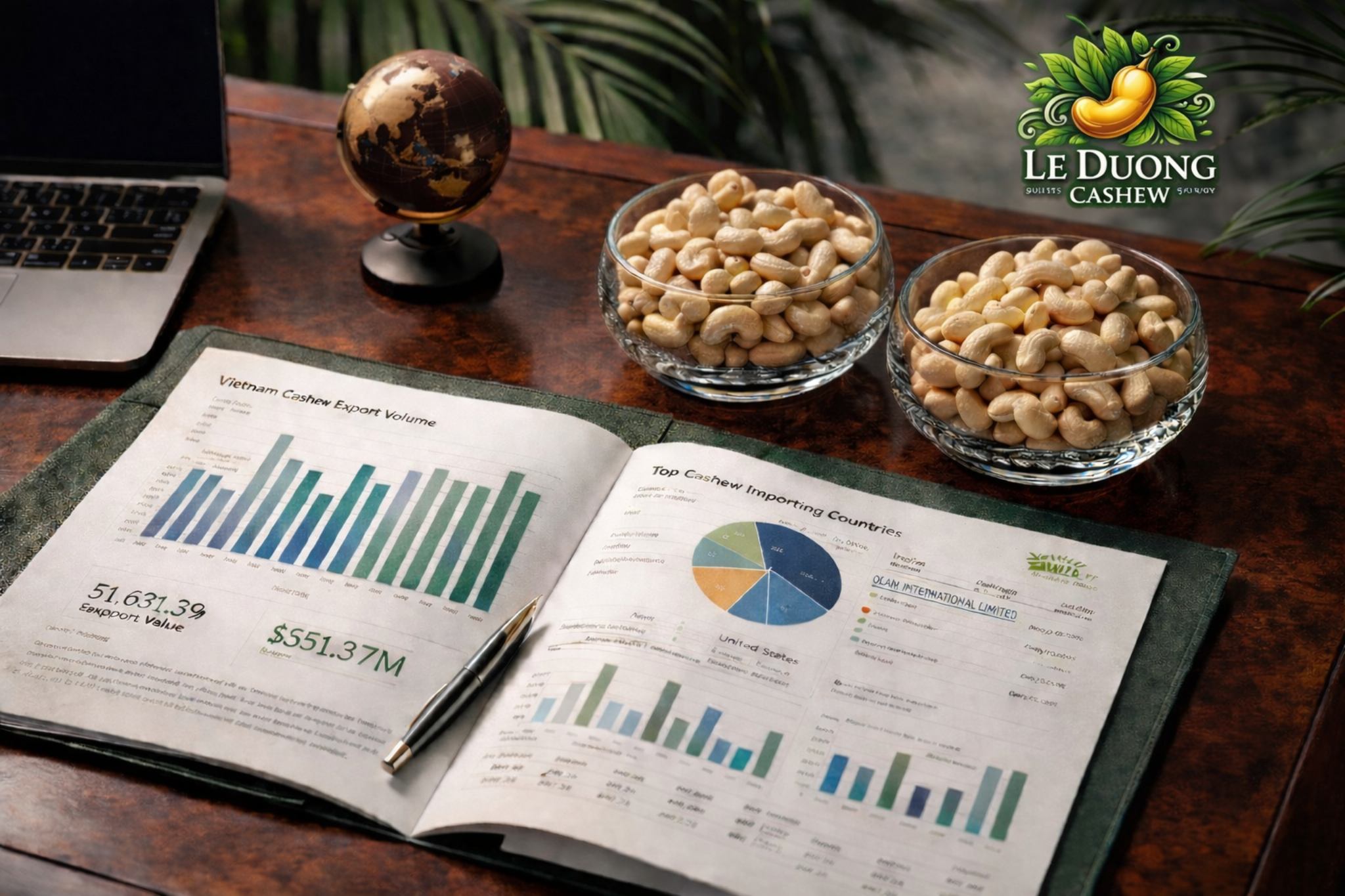
Updated 8 August 2026. This page has been revised to correct the way its March figures were described. The dataset records 51,631.39 metric tonnes with a value of US$351.37 million and a weighted average of US$6.805/kg. An independently accessible industry reference identifies it as the March 2026 Vietnam Cashew Import Report. Because the published reference does not disclose the reporter, HS-code coverage or transaction methodology, these figures should not be presented as Vietnam’s official national cashew export total.
Used carefully, the dataset still offers useful signals about recorded trade value, pricing and buyer analysis. This market note explains what the numbers show, what they do not show and how importers can use them when discussing Vietnam-origin cashew kernels.
March 2026 dataset at a glance
| Metric | March 2026 result | How to read it |
|---|---|---|
| Recorded volume | 51,631.39 MT | Volume covered by this specific report, not a verified national Customs total |
| Recorded value | US$351.37 million | Value attached to transactions in the same dataset |
| Weighted average | US$6.805/kg | Total value divided by total recorded kilograms; not a spot quote for one grade |
| Year-on-year volume change | +6.43% | Comparison reported within the same dataset |
| Year-on-year value change | +5.77% | Comparison reported within the same dataset |
| Year-on-year average-price change | -0.62% | From US$6.848/kg to US$6.805/kg within the report |
The arithmetic is internally consistent: US$351.37 million divided by 51.63139 million kilograms is approximately US$6.805/kg. However, arithmetic consistency does not establish the dataset’s customs scope. The percentage changes are therefore best treated as report-level indicators, not official changes in all Vietnamese cashew exports.
Why the US$6.805/kg average is not a WW320 price
A weighted average can combine different grades, specifications, packing formats, Incoterms, destinations and shipment dates. Whole white kernels, scorched kernels, splits, pieces and value-added products do not trade on one interchangeable basis. Freight, insurance and payment terms can also change the recorded unit value.
For procurement, compare like with like. A usable quotation should identify at least:
- grade and kernel count or piece size;
- moisture, defects, colour and other buyer-agreed tolerances;
- packing format, net weight and label requirements;
- Incoterm, named port or place and shipment window;
- inspection, testing and document requirements; and
- quotation validity and payment terms.
Buyers can review Le Duong’s cashew grade portfolio, quality-document hub and export ordering process before requesting a grade-specific offer.
Keep shipment-level data separate from national trade statistics
National 2025 totals reported by reputable Vietnamese publications are not identical. Viet Nam News, citing Vietnam Customs, reported 766,585 tonnes and more than US$5.2 billion. Nhan Dan, reporting VINACAS information in March 2026, cited nearly 798,000 tonnes and more than US$5.43 billion. Differences can arise from revisions, product coverage, cut-off dates or classification choices.
The practical lesson is methodological: do not splice a third-party monthly shipment dataset into a national Customs series unless the reporter, direction of trade, HS codes, date basis and revision policy are aligned. For time-series analysis, use one consistent source and document every filter.
What buyer consolidation can and cannot tell us
Trade databases often contain several spellings, branches or legal entities for the same corporate group. Normalising those names can improve account analysis and reduce double counting. But the result depends on a published entity map: which subsidiaries were combined, over what period and under which parent.
The March report refers to stronger buyer concentration after legal-name consolidation. That is a useful analytical direction, but the accessible source does not publish the underlying buyer table or mapping rules. This article therefore does not rank or name individual buyers. Any account-level conclusion should be verified against the original records before sales outreach or credit decisions.
2026 market context for Vietnam cashew buyers
At its March 2026 conference, VINACAS set an industry target of about 800,000 tonnes and US$5 billion of kernel exports for the year, according to Nhan Dan. The same report highlighted risks from Vietnam’s dependence on imported raw cashew nuts, tighter raw-nut policies in parts of Africa, logistics disruption, higher freight costs and softer demand in some major markets.
Those conditions make specification control and contract structure more important than a single headline average. Importers should consider:
- Specification discipline: attach the approved specification and sampling or inspection method to the contract.
- Grade alternatives: pre-agree acceptable alternatives when application permits, rather than substituting after production.
- Price validity: align quotation validity with raw-material and freight exposure.
- Incoterm clarity: compare FOB, CFR/CNF and CIF offers on a consistent destination and date basis.
- Document readiness: confirm labels, certificates, test reports and destination requirements before shipment.
What can safely be concluded
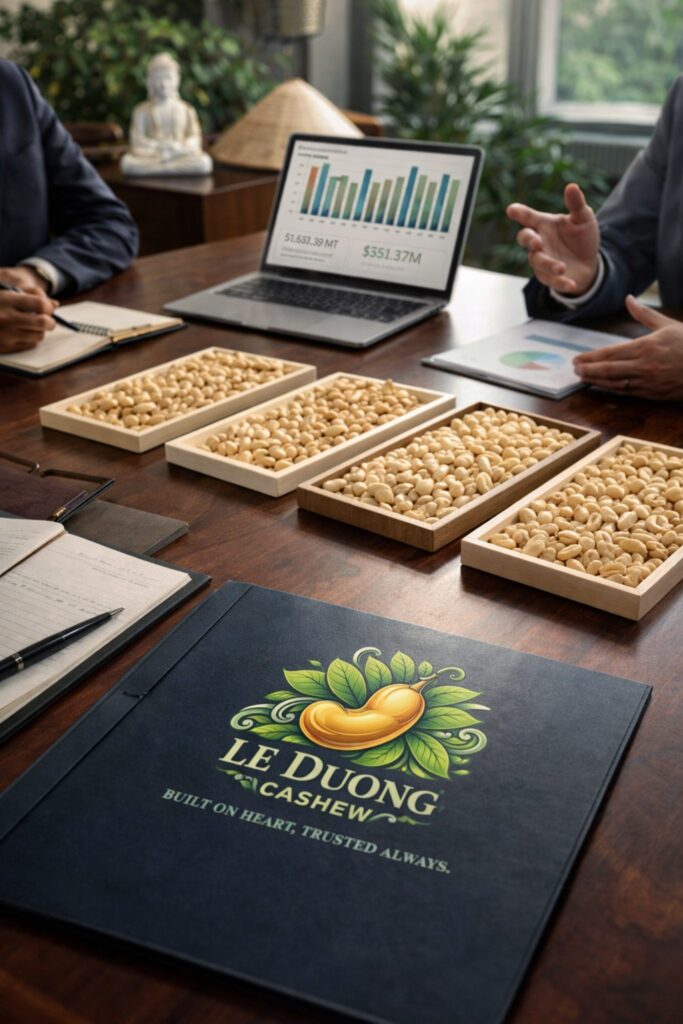
- The reported March dataset contains 51,631.39 MT and US$351.37 million, producing a weighted average near US$6.805/kg.
- Within that dataset, volume and value increased year on year while the weighted average eased slightly.
- The average is an aggregate indicator; it is not a product-grade quotation.
- Buyer-name normalisation can improve concentration analysis, but results require a reproducible entity map.
What cannot safely be concluded
- That 51,631.39 MT is Vietnam’s official total cashew export volume for March 2026.
- That US$6.805/kg is the market price for WW320 or any other individual grade.
- That a buyer ranking is complete without the report’s underlying records and consolidation rules.
- That a report-level year-on-year change is directly comparable with a national Customs series.
Frequently asked questions
Is 51,631.39 MT Vietnam’s official March 2026 export total?
No. The accessible industry reference labels the figures as a Vietnam Cashew Import Report and does not disclose enough methodology to treat them as an official national export total.
Does US$6.805/kg represent the March price of WW320?
No. It is a weighted average across the records included in the dataset. Grade, quality, packing, Incoterm, destination and shipment timing can materially change a quotation.
Why do published 2025 national totals differ?
Publications may use different data cut-offs, revisions, product classifications or reporting scopes. Analysts should record the source and avoid mixing series without reconciling those differences.
What should a buyer send for a comparable quotation?
Send the grade, specification, quantity, packing, destination port, Incoterm, shipment window and testing or document requirements. Use the quotation form to brief Le Duong’s export team.
Sources and methodology
- Cashew Nut Association of Cambodia: March 2026 Vietnam Cashew Import Report figures
- Nhan Dan: Vietnam cashew export risks and VINACAS 2026 target
- Viet Nam News: 2025 export statistics attributed to Vietnam Customs
Editorial note: Le Duong Cashew corrected the earlier export wording on 8 August 2026 after reviewing the accessible source description. This article is market commentary, not a customs declaration, price offer or investment recommendation.