
Vietnam cashew kernels new crop 2026: harvest-ready supply for global buyers
The Vietnam cashew kernels new crop 2026 is ready to harvest, and for importers this is the window when supply planning, grading discipline, and documentation readiness matter most. New-crop timing often affects kernel color, moisture stability, and shipment schedules—especially for snack brands, roasters, ingredient users, and wholesalers who need consistent specifications.
If you’re sourcing for multiple destinations (“all country” markets), the practical goal is the same: secure stable volumes across core grades (WW160, WW180, WW240, WW320), lock in packaging and labeling details early, and align QC checkpoints so every lot ships with predictable performance in your production line and warehouse.
Vietnam cashew kernels new crop 2026: harvest-ready supply for global buyers
Table of Contents
-
Why new-crop timing matters for global buyers
-
Grade guide: WW160, WW180, WW240, WW320 and best use cases
-
QC approach: moisture, defects, foreign matter, traceability, COA-style reporting
-
Packaging options: bulk cartons, vacuum, nitrogen (upon request), labeling & batch coding
-
Export documentation: what to prepare to avoid clearance delays and demurrage
-
Logistics notes: lead-time planning, container strategy, and storage in hot climates
-
Supplier evaluation checklist for 2026 new-crop sourcing
Why new-crop timing matters for global buyers
New crop is not just a calendar label—it’s a supply-chain reality. During harvest and early processing, buyers can benefit from:
-
Planning clarity: fresh production cycles mean clearer forward allocation for contract packing and recurring shipments.
-
Specification stability: when moisture control and drying are managed well, kernels travel better and store more reliably.
-
Color and appearance management: “white wholes” are graded by appearance and integrity; consistent sorting reduces surprises on arrival.
For buyers supplying retail or foodservice channels, new-crop procurement is also when you set expectations for kernel sizing, roast behavior, and acceptable defect limits. Procurement teams often pair this with tighter incoming inspection and COA alignment (moisture, counts, foreign matter control) to reduce claim risk.
Grade guide: WW160, WW180, WW240, WW320 and best use cases
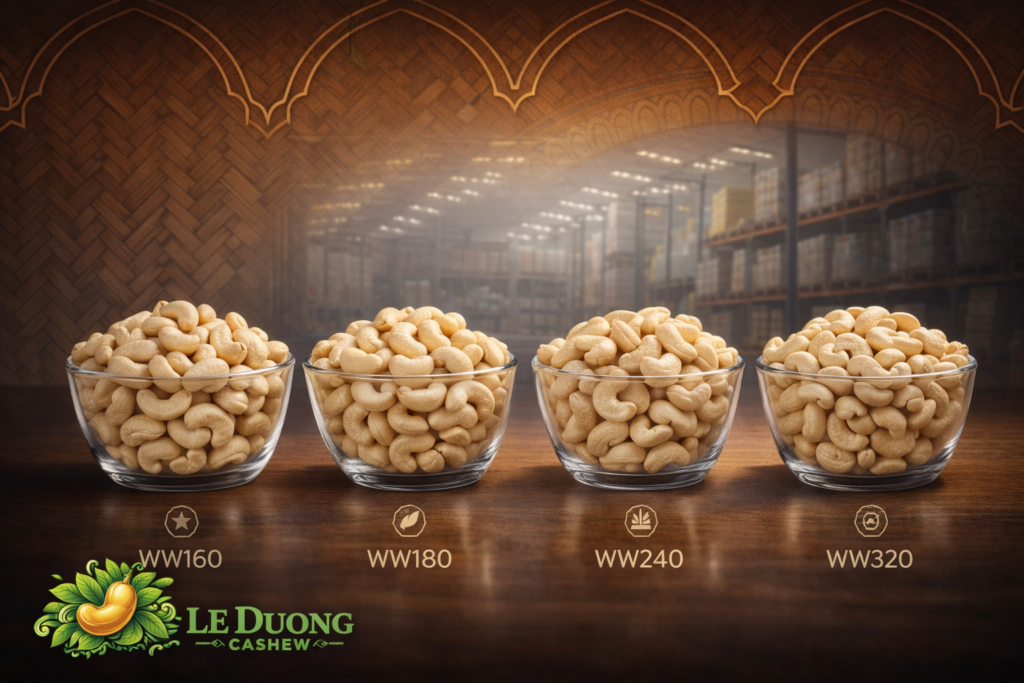
Your product focus—WW160 + WW180 + WW240 + WW320—covers the most widely traded premium whole grades.
WW160
Often preferred for premium snack mixes and gift-pack segments where larger whole kernels improve perceived value. Typical use cases include high-end roasting programs, airline/hotel snack packs, and premium retail jars.
WW180
A strong balance of size and yield for branded snack lines and roasters. WW180 can be a practical “hero grade” when you want a premium look without over-concentrating cost.
WW240
A mainstream staple for many buyers. WW240 often works well for standard roasting, seasoning lines, and broad distribution where consistent sizing supports automated packing and steady portion control.
WW320
One of the most common commercial grades globally. WW320 is widely used for mass-market roasted/seasoned packs, industrial ingredient use, and co-packing programs that value reliable availability.
Across all four grades, buyers typically want consistency in: whole integrity, low broken percentage in “whole” specification, clean odor profile, stable moisture, and uniform color sorting.
QC approach: moisture, defects, foreign matter, traceability, COA-style reporting
A practical QC program for export-grade cashew kernels focuses on risk controls that buyers can verify lot-by-lot. A robust approach can include:
-
Moisture control: monitoring throughout drying, grading, and packing to support shelf stability and reduce mold risk.
-
Defect limits (as agreed): managing common defect categories (discoloration, spotted kernels, insect damage, shrivels) and aligning to buyer specs for “white wholes.”
-
Foreign matter control: layered controls (sieving, magnets where applicable, visual inspection, housekeeping standards) and sealed packing flow to prevent contamination.
-
Traceability: batch coding that connects production date/line, packing shift, and carton/pallet ID; this supports faster investigations if issues arise.
-
COA-style reporting: lot-level documentation that can include moisture, visual grade checks, net weight verification, and agreed parameters—helpful for import clearance and internal QA.
This is also where supplier discipline matters: consistent grading, calibrated scales, controlled storage conditions, and documented inspections reduce variability—especially important when shipping to diverse climates and port conditions.
For buyers seeking halal assurance: cashews are plant-based, and halal requirements often relate to handling controls, cleaning, and cross-contact prevention in the packing environment. Documentation or certification can be available upon request, subject to supply chain requirements and buyer specifications.
Mid-article inquiry link (for specs, sampling, and shipment planning): https://leduongcashew.com/en/
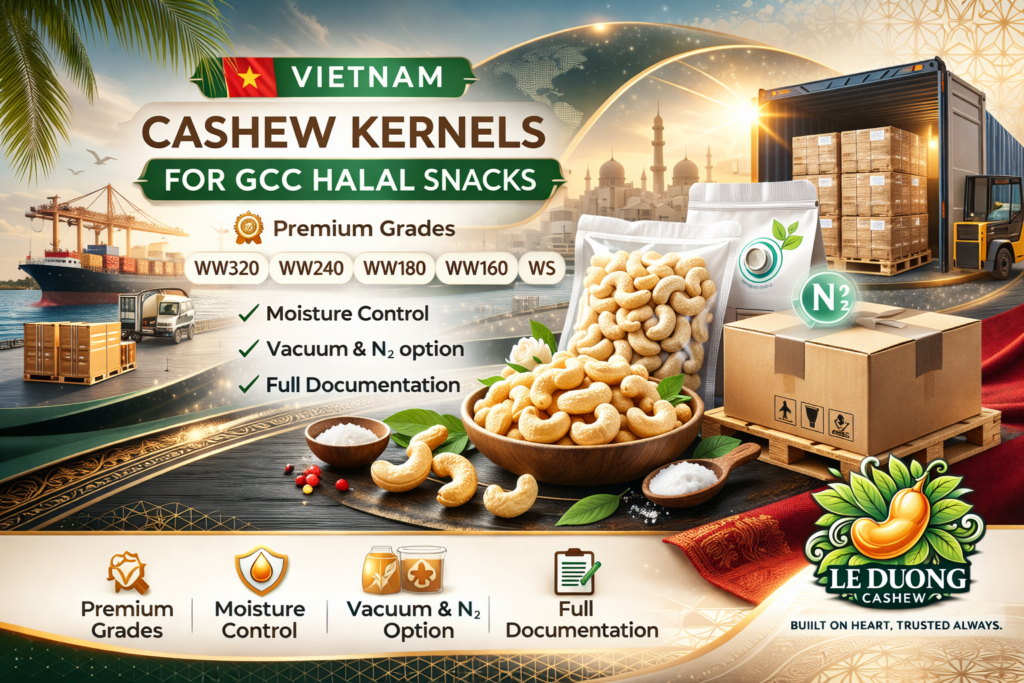
Vietnam Cashew Kernels Supplier for GCC Halal Snacks
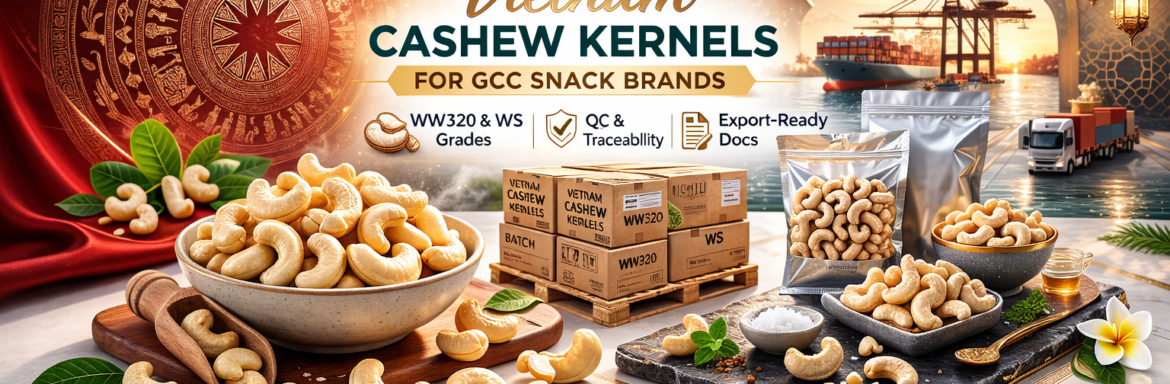
Packaging options: bulk cartons, vacuum, nitrogen upon request, labeling & batch coding
Packaging is not “afterthought”—it’s part of quality preservation during ocean freight and inland distribution. Exporters typically support:
-
Bulk export cartons sized for pallet efficiency and warehouse handling
-
Vacuum packing to support freshness and reduce oxidation risk
-
Nitrogen flushing (upon request) for buyers prioritizing longer transit or extended storage buffers
-
Flexible packaging formats depending on buyer SOPs (inner bags, carton specs, palletization patterns)
Labeling and batch coding
To support receiving inspection and traceability, labels often include: product grade (WW160/180/240/320), net weight, production/packing date (as agreed), lot/batch code, and exporter details—aligned to buyer label templates.
Export documentation: what to prepare to avoid clearance delays and demurrage
Smooth shipments are built on documentation readiness. Common export documents include:
-
Commercial invoice
-
Packing list (carton counts, net/gross weight, pallet details)
-
Bill of Lading (B/L) or Air Waybill (AWB) depending on mode
-
Certificate of Origin where applicable / as requested
-
Test reports / COA as agreed with buyer specs
-
Any destination-specific requirements (labeling language, pre-notification, or inspection protocol) agreed in advance
To reduce port risk: align the exact HS code usage, consignee details, and packaging descriptions early; ensure the packing list matches physical pallet/carton counts to avoid holds and demurrage.
Logistics notes: lead-time planning, container strategy, and storage in hot climates
New-crop season can compress lead times if multiple buyers book the same windows. Practical logistics planning includes:
-
Lead-time buffers for production, QC release, and documentation checks before vessel cut-off
-
Container/pallet strategy: optimize pallet patterns for stability and airflow; use clean, dry containers; consider desiccants when shipping through humid routes (as agreed)
-
Hot-climate storage: advise importers to store in cool, dry conditions away from direct sunlight; maintain good warehouse ventilation; avoid temperature spikes that may affect texture and shelf performance
These steps help protect kernel crispness, reduce moisture migration, and minimize claims related to odor pickup or packaging compromise.
Supplier evaluation checklist for 2026 new-crop sourcing
When qualifying a supplier for Vietnam cashew kernels new crop 2026, buyers can verify:
-
Grade integrity: consistent WW160/180/240/320 sizing and whole count discipline
-
QC system: moisture monitoring plan, defect sorting method, foreign matter controls
-
Traceability: batch coding structure and retention of packing/inspection records
-
Documentation readiness: accurate invoice/packing list, COA-style reporting, origin documents where applicable
-
Packaging flexibility: vacuum options, nitrogen upon request, buyer labeling templates supported
-
Communication & pre-shipment alignment: samples, spec sheet confirmation, packing photos, container loading checks
-
Stability of supply: allocation planning and realistic shipment schedules during peak season
If you want to align specs, packaging, and shipment windows for your destination(s), reach out here: https://leduongcashew.com/en/
Buyer FAQ
Q1: What does “new crop 2026” change for my procurement plan?
New crop often changes availability timing and production allocation. The best practice is to lock grade, packaging, and QC parameters early and align shipment windows around vessel schedules.
Q2: Which grade should I choose between WW240 and WW320?
WW240 often suits buyers needing a larger, premium look; WW320 is a widely used commercial staple. The choice depends on your pack format, cost target, and visual preference.
Q3: How do you control moisture for long-distance shipping?
A strong program monitors moisture through drying, grading, and packing, and uses suitable packaging (often vacuum; nitrogen upon request) aligned with transit duration and storage conditions.
Q4: Can you support destination-specific labeling and documents?
Yes—invoice, packing list, B/L or AWB, and origin documentation can be prepared as required. Additional test reports can be provided as agreed with buyer specifications.
Q5: Are cashew kernels halal?
Cashews are plant-based. Halal assurance usually relates to handling and cross-contact controls in processing/packing. Documentation or certification can be available upon request, subject to supply chain requirements.