


MSC End of Voyage and Cashew Exports to the Gulf Market
For exporters shipping cashew kernels into the Gulf market, transport reliability is now a procurement issue, not just a freight issue. MSC has activated an “End of Voyage” measure for cargo bound for Arabian Gulf ports under its custody, meaning containers may be discharged at the nearest safe port instead of reaching the original Gulf destination. A mandatory USD 800 per container surcharge also applies to affected shipments, while onward transport and local discharge-related costs remain with cargo interests.
For importers, snack brands, co-packers, and wholesale buyers in the GCC, this changes how landed cost, inventory timing, and supplier coordination should be evaluated. For cashew exporters, it raises the importance of packaging resilience, moisture control, traceability, document accuracy, and realistic lead-time planning.
Table of Contents
-
Why this matters to Gulf buyers
-
Product grades and best use cases
-
QC approach for export consistency
-
Packaging options and batch coding
-
Export documents and customs readiness
-
Logistics notes for hot-climate destinations
-
Supplier evaluation checklist
-
Buyer FAQ
-
Internal Links (Suggestions)
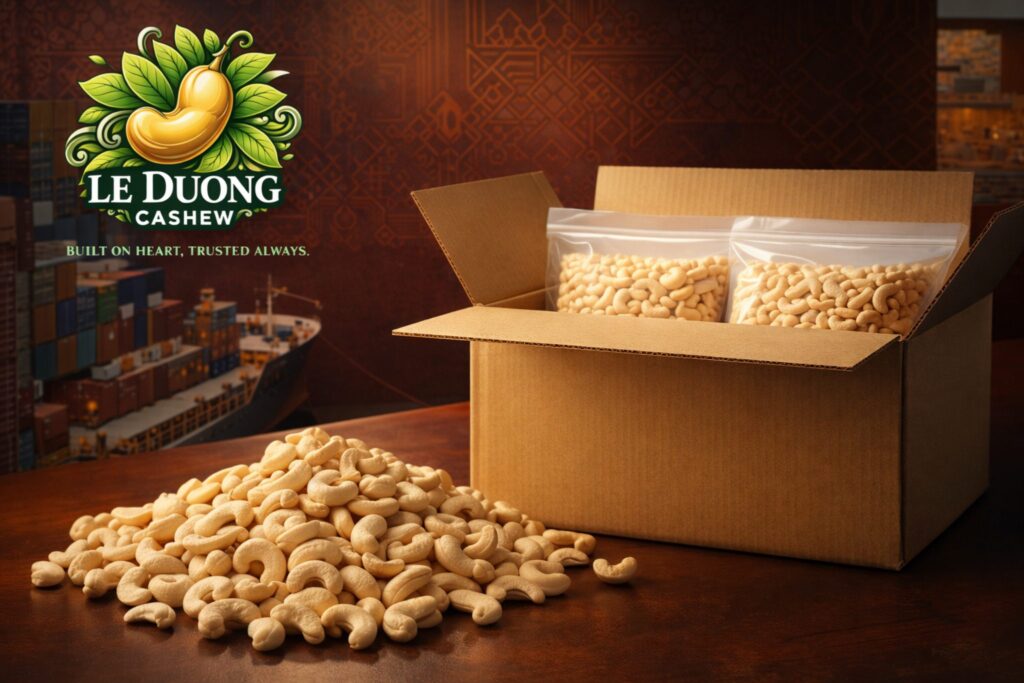
MSC End of Voyage and Cashew Exports to the Gulf Market
Why this topic matters to target market buyers
Buyers in the UAE, Saudi Arabia, Qatar, Kuwait, Bahrain, and Oman often work with fixed production schedules, private-label launch windows, Ramadan demand planning, and retail replenishment cycles. When a carrier discharges cargo at a transshipment port instead of the final Gulf port, the shipment can face additional handoff steps, storage exposure, and coordination gaps before final delivery. Reuters reported MSC’s measure covers Gulf-bound containers and places onward movement responsibility on the cargo side, which can materially affect supply-chain timing.
For cashew trade, even when product quality remains intact, operational disruption can create commercial friction:
-
delayed warehouse intake
-
mismatch between packing list and actual receiving plan
-
added local port or storage cost
-
increased exposure to temperature and humidity if handling is poorly controlled
-
pressure on buffer stock at destination
That is why Gulf buyers increasingly value suppliers that can support shipment planning with grading discipline, document readiness, and packaging suitable for transshipment risk. For a more detailed review of export handling options, buyers can request a shipment planning discussion through our Whatsapp.
Product focus details: grades and best use cases
For Gulf market buyers, product fit should remain aligned with end use, even when freight conditions become less predictable.
WW320
A widely traded grade for retail packs, snack applications, roasted and salted lines, and broad wholesale distribution. WW320 often offers a practical balance between visual appeal, yield, and budget control.
WW240
Suitable for premium retail, gifting lines, and applications where a larger whole kernel appearance supports higher shelf perception.
WW180 and WW160
Often considered for premium gifting, hospitality, and high-visibility presentation formats. These grades may require tighter packing discipline and stronger carton integrity because visual quality expectations are higher.
A160 / A180 / A240
Depending on buyer specs and regional naming practice, these grades can support premium whole-kernel demand with size-focused procurement programs, subject to agreed specifications.
WS and pieces
Useful for bakery, confectionery, fillings, sauces, cereal blends, industrial foodservice, and value-engineered manufacturing where appearance of whole kernels is not the main buying driver.
In disrupted shipping environments, buyers often review not only grade but also pack format, batch size, and replenishment frequency. A supplier that understands use-case fit can help reduce overbuying, under-spec ordering, or avoidable claim risk.

Cashew Exports to the Gulf Market
QC approach
When logistics uncertainty increases, QC needs to be documented in a way that helps buyers manage receiving risk.
A disciplined export QC approach can include:
-
defect limit review against agreed contract specs
-
moisture control before stuffing to support shelf-life stability
-
foreign matter control through sorting and final inspection
-
lot segregation and traceability by production batch
-
carton count verification and sealing control
-
COA-style reporting aligned with agreed buyer parameters
For cashew kernels, moisture management remains especially important where cargo may face extended dwell time or warm conditions during transshipment. A practical buyer-facing QC file may include production date, batch code, grade confirmation, net weight, visual inspection notes, and agreed testing references. This type of reporting can support smoother receiving discussions if there is a delay between vessel discharge and final inland delivery.
Halal assurance should also be communicated carefully. Cashews are plant-based, but halal assurance often relates to handling controls, cross-contact prevention, and documentation within the relevant supply chain scope. Certification or supporting statements may be available upon request, subject to buyer requirements and supply chain coverage.
Packaging options
Packaging should be selected not only for transit efficiency but also for handling resilience when cargo may be discharged at an intermediate port.
Common options include bulk export cartons, vacuum packing, and nitrogen-flushed formats upon request. Final structure depends on kernel grade, buyer channel, storage expectations, and transit profile.
A strong packaging discussion usually covers:
-
master carton strength and stacking suitability
-
inner liner protection
-
vacuum integrity where specified
-
nitrogen option upon request for selected programs
-
pallet or floor-load strategy
-
outer label format
-
batch coding and traceability marks
For Gulf shipments, clear labeling and batch coding help reduce delays when cargo is handled more than once. Exporters should ensure carton marks, lot numbers, buyer references, and destination data remain consistent across packing list, invoice, and shipping marks.
Export docs
Under disrupted routing conditions, document accuracy becomes more valuable because customs and onward delivery may involve extra coordination. MSC’s notice indicates discharge-related consequences can shift to cargo interests under its bill of lading terms, so exporters and buyers should align responsibilities early.
A standard export file can include:
-
commercial invoice
-
packing list
-
bill of lading or AWB as applicable
-
certificate of origin where applicable
-
test reports as agreed
-
insurance documents where relevant
-
any pre-agreed import support paperwork required by the buyer
Clearance timing also matters. Where shipments may pause at a transshipment location, incomplete paperwork can increase storage, demurrage, or coordination delays. Buyers should confirm who handles destination agent coordination, customs instructions, and any re-forwarding requirements before cargo sails.
MSC End of Voyage and Cashew Exports to the Gulf
Logistics notes
Current Middle East shipping conditions are being reshaped by conflict-related disruption around the Strait of Hormuz. Reuters reported MSC’s Gulf cargo policy shift and noted broader risks of supply-chain delays in the coming weeks; other carriers have also adjusted operations.
For cashew exporters, practical logistics planning now includes:
-
building additional lead-time buffer into sales commitments
-
evaluating whether split shipments reduce exposure
-
reviewing container loading pattern for carton stability
-
choosing palletized or floor-loaded strategy based on buyer handling setup
-
planning destination storage for hot climates
-
confirming who manages onward transport if final discharge changes
-
checking whether marine insurance wording responds adequately to route deviation and transshipment risk
In hot climates, warehouse conditions after arrival matter just as much as ocean transit. Buyers should prepare clean, dry, temperature-aware storage with good stock rotation discipline. Exporters should avoid overpromising fixed arrival windows while routing remains unstable.
Supplier evaluation checklist
Before confirming supply for the Gulf market during a volatile freight period, buyers should verify:
-
Can the supplier explain grade suitability clearly by end use?
-
Is the QC file structured, batch-based, and easy for procurement and QA teams to review?
-
Are moisture control, foreign matter control, and carton integrity addressed consistently?
-
Can packaging be adapted for vacuum or nitrogen upon request?
-
Is documentation prepared accurately and shared early for review?
-
Does the supplier understand transshipment-related risk and destination coordination needs?
-
Are lead times quoted conservatively, with contingency planning rather than optimistic promises?
-
Can the supplier support traceability and claim handling with lot-level evidence?
A reliable supplier is not simply one who offers a price. In the current market, reliability also means documentation readiness, batching discipline, risk communication, and the ability to support buyers through operational disruption.
Buyer FAQ
1) What does “End of Voyage” mean for Gulf-bound cargo?
It means the carrier may end the contract carriage at a safe alternative port instead of the original Gulf destination, requiring cargo interests to arrange onward movement and cover related local costs, subject to contract terms.
2) Does this automatically make the cashew cargo non-compliant?
Not necessarily. Product compliance depends on agreed specs, handling conditions, packaging integrity, and supporting documentation. The bigger issue is operational delay and control during extra handling.
3) Which cashew grades are usually most practical for broad GCC retail and wholesale?
WW320 is often a practical mainstream choice, while WW240 and larger whole grades can suit premium presentation categories. Pieces and WS can work well for industrial food use, depending on buyer needs.
4) Should buyers request extra packaging protection now?
For some programs, yes. Vacuum packing, stronger carton specification, and clearer batch coding can support risk control, subject to product format and buyer specs.
5) What documents should be double-checked before shipment?
At minimum: invoice, packing list, bill of lading details, origin documentation where applicable, and any agreed test reports. Destination contact and re-forwarding responsibility should also be aligned early.