
MSC’s New Hormuz-Bypass Route: What Food Importers Should Know
Global food trade depends on timing, trust, and transport reliability. When a major shipping line changes its route to avoid a strategic chokepoint, the impact goes far beyond container schedules. It affects procurement planning, import costs, delivery confidence, and the way food businesses manage supply risk.
MSC Mediterranean Shipping Company has reportedly announced a new Europe–Red Sea–Middle East Express service designed to bypass the Strait of Hormuz. According to recent reports, the first sailing is scheduled to depart from Antwerp on May 10, with a rotation connecting several European ports before moving through the Suez Canal and Red Sea, then linking with Saudi Arabian ports such as Jeddah and King Abdullah. The service is expected to combine ocean freight, overland trucking across Saudi Arabia, and feeder connections into the Gulf region.
For food importers, distributors, and F&B manufacturers, this is more than a shipping headline. It is a reminder that resilient supply chains are now a commercial advantage.
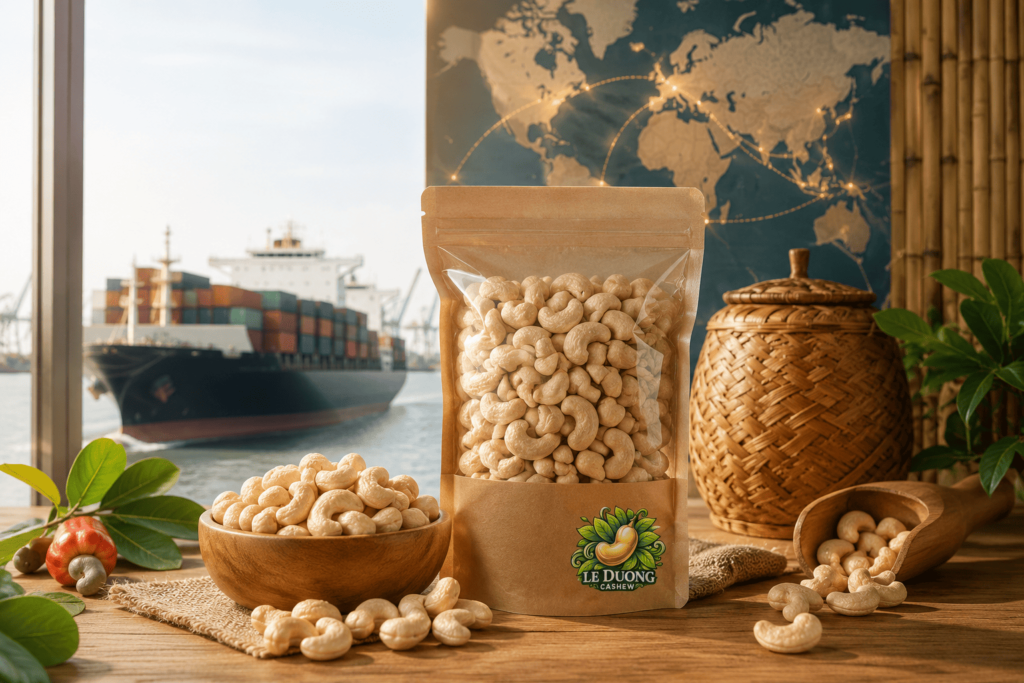
MSC’s New Hormuz-Bypass Route What Food Importers Should Know
Why the Strait of Hormuz Matters to Global Trade
The Strait of Hormuz is one of the world’s most sensitive maritime corridors. It connects the Persian Gulf with the Gulf of Oman and the Arabian Sea, making it vital for energy flows, container movement, and regional trade. Recent disruptions and heightened geopolitical tensions have pushed shipping companies to look for safer and more predictable alternatives. Reports indicate that the strait has faced severe restrictions, with vessel movements declining significantly in recent weeks.
For importers of food ingredients, nuts, snacks, bakery inputs, dairy alternatives, and packaged goods, such disruptions can create multiple risks: longer lead times, higher freight rates, limited vessel availability, port congestion, and uncertainty in delivery planning. These issues are especially important for businesses serving modern retail, foodservice, private label, and industrial food production, where delivery windows and inventory accuracy matter.
What MSC’s New Route Signals
MSC’s new route suggests that large carriers are actively redesigning trade networks to maintain cargo flow despite regional instability. Instead of relying only on traditional maritime access through Hormuz, the new model appears to use a multimodal structure: sea transport to Saudi Arabia’s Red Sea coast, land transport across Saudi Arabia, and feeder services into Gulf destinations.
This approach may not fully replace the efficiency of normal shipping lanes, but it gives importers an additional layer of continuity. For food companies, that continuity is valuable. A delayed shipment of cashew kernels, plant-based ingredients, bakery nuts, or snack components can affect production schedules and customer commitments. In today’s market, buyers increasingly evaluate suppliers not only by price, but also by their ability to support stable, transparent, and flexible logistics.
The Commercial Lesson for F&B Importers
The key takeaway is simple: supply chain resilience should be built before disruption happens.
Food importers should review their sourcing strategies with three practical questions:
First, is the supplier located in a strong export country with proven infrastructure? Second, does the supplier understand international documentation, quality control, and shipment coordination? Third, can the supplier support buyers with consistent product quality, realistic lead times, and clear communication when logistics conditions change?
This is where Vietnam holds a strong position in the global cashew trade. Vietnam has long been recognized as one of the world’s leading cashew processing and export hubs, serving buyers across Asia, Europe, the Middle East, and North America. For F&B companies, Vietnamese cashew kernels offer a strong combination of quality consistency, versatile applications, competitive supply capacity, and export experience.
Why Cashew Buyers Should Pay Attention
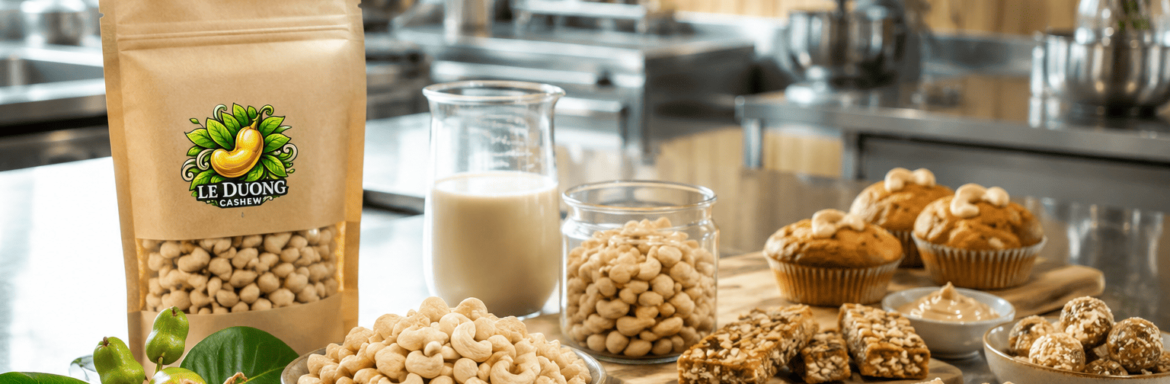
Cashew kernels are widely used across the food industry: roasted snacks, trail mixes, confectionery, bakery products, granola, cereals, vegan cheese, plant-based milk, sauces, desserts, and premium gifting. Because cashews are both an ingredient and a finished consumer product, logistics reliability directly affects commercial performance.
For example, a snack brand may need stable W320 or W240 cashew kernels for monthly roasting schedules. A bakery manufacturer may need broken cashew grades for toppings and fillings. A plant-based food producer may require clean, consistent cashew kernels for smooth texture and neutral flavor. In each case, the buyer needs more than a container of nuts. They need a supplier capable of supporting predictable production.
When shipping routes shift, experienced exporters become more important. They help buyers assess available routes, prepare export documents properly, coordinate with freight forwarders, and reduce avoidable delays. A professional cashew supplier does not control geopolitics, but it can help importers manage risk with better planning and clearer communication.
Vietnam Cashew Supply and Middle East Demand
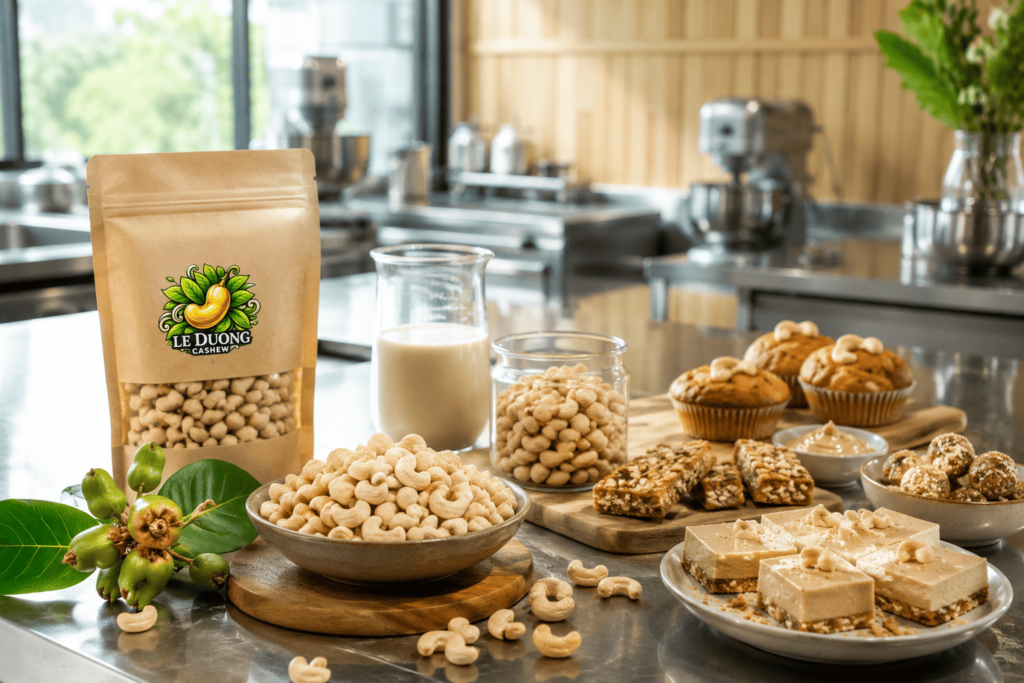
Vietnam Cashew Supply for Middle East Markets
The Middle East remains a promising market for cashew kernels and premium nut products. Demand is supported by hospitality, retail, airline catering, foodservice, traditional confectionery, modern snacking, and re-export trade. Countries in the Gulf region often require dependable supply, strong packaging standards, halal awareness, and professional import documentation.
MSC’s Hormuz-bypass route highlights how logistics networks are adapting to keep Middle East trade moving. For Vietnamese cashew exporters, this creates both a challenge and an opportunity. The challenge is to monitor freight conditions carefully. The opportunity is to strengthen trust with buyers who are looking for reliable, export-ready suppliers outside high-risk regions.
Le Duong Cashew is well-positioned to support international buyers seeking Vietnamese cashew kernels for F&B, wholesale, and processing applications. With a practical understanding of export requirements, product grades, quality expectations, and buyer communication, Le Duong Cashew can help customers build a more dependable cashew sourcing strategy.
Building a More Resilient Cashew Procurement Strategy
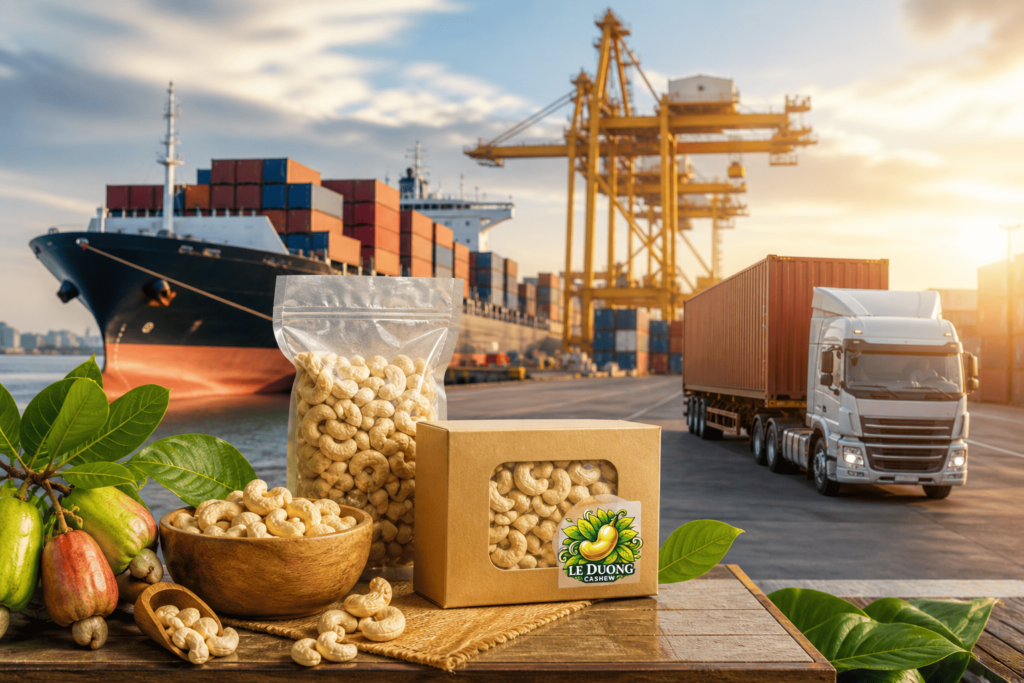
Alternative Route, Stable Supply
Importers should not wait for freight disruption to review their procurement model. A strong cashew sourcing strategy should include approved alternative grades, realistic safety stock, clear shipment planning, trusted supplier relationships, and regular communication on logistics conditions.
For F&B businesses, resilience is not only about avoiding risk. It is about protecting sales. A stable supply of high-quality cashew kernels allows companies to launch products on time, maintain recipe consistency, serve retail contracts, and respond to market demand.
MSC’s new Hormuz-bypass route is a strong signal that global trade is entering a new phase. Flexibility, multimodal logistics, and supplier reliability are becoming essential. For food importers, especially those sourcing cashew kernels, the smartest response is to work with suppliers who understand both product quality and international trade reality.
In a more uncertain shipping environment, Vietnamese cashews remain a strong option for buyers seeking quality, versatility, and commercial reliability. With the right partner, disruption can be managed—and supply chains can become stronger.