
WW320 Price Drop: Why WW240 Demand Is Rising Before May Holidays
As Vietnam approaches the April 30 Reunification Day and May 1 International Labor Day holidays, the cashew kernel market is showing a clear shift in buying behavior: WW320 prices are under downward pressure, while demand for WW240 is increasing strongly because WW180 remains at peak levels.
For importers, wholesalers, roasters, food manufacturers, and private-label snack brands, this is not just a short-term price movement. It is a signal of how global buyers are adjusting their grade strategy before holiday closures, shipment planning deadlines, and the next procurement cycle.
Vietnam remains one of the most important cashew processing and export hubs in the world. In 2025, Vietnam exported nearly 766,600 tons of cashew nuts with export revenue reaching about USD 5.23 billion, while the average export price rose around 13.9% year over year. This gives Vietnamese suppliers a central role in global price discovery, especially for popular grades such as WW320, WW240, and WW180.
WW320 Price Drop Why WW240 Demand Is Rising Before May Holidays
Why WW320 Is Dropping Before the Holiday
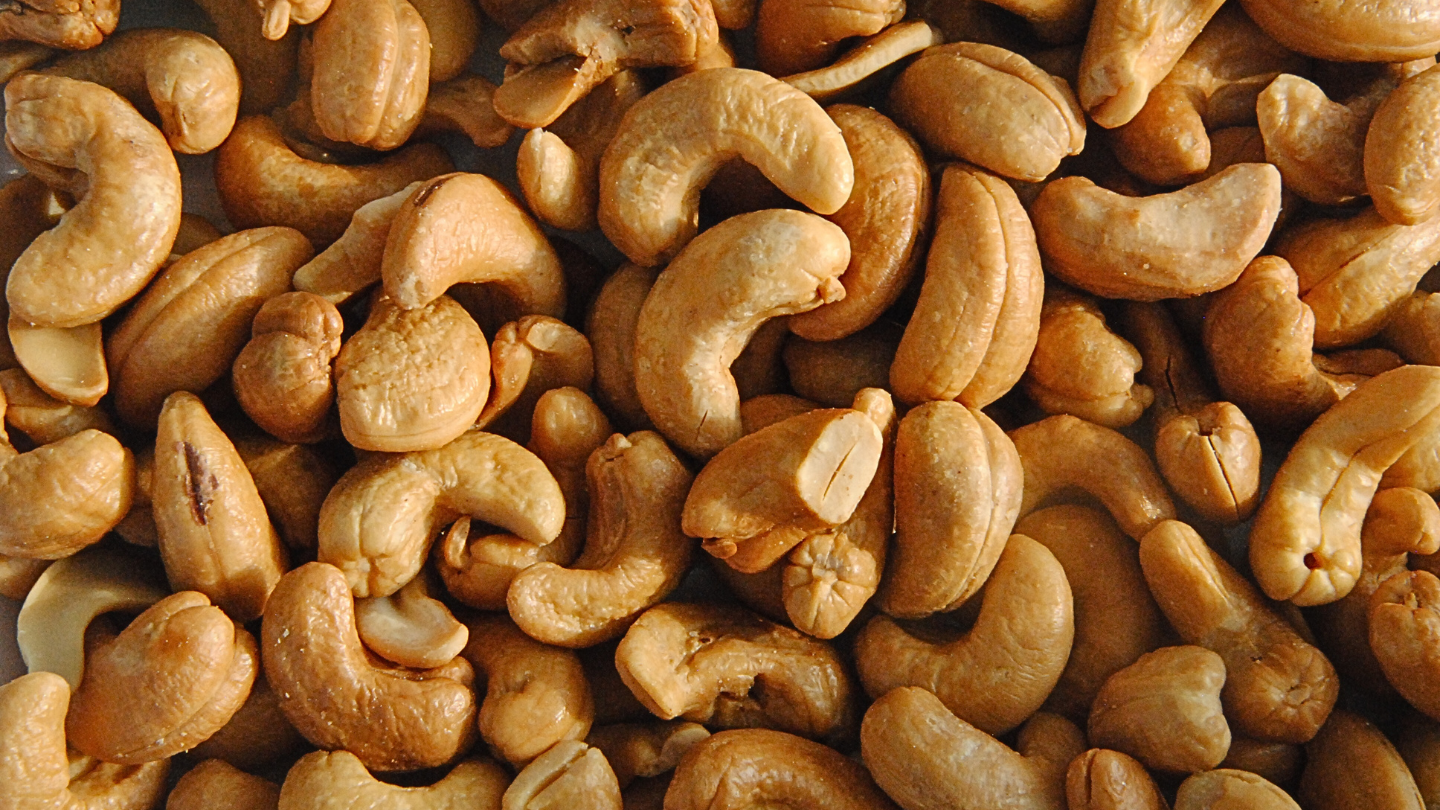
WW320 is traditionally the most widely traded cashew kernel grade because it offers a strong balance between size, appearance, price, and application flexibility. It is widely used in roasted cashew snacks, retail packs, mixed nuts, confectionery, bakery, and foodservice.
However, before long holidays in Vietnam, trading activity often becomes more selective. Buyers who already covered short-term needs may delay additional WW320 purchases, while exporters may adjust prices to close pending contracts before factory and logistics schedules slow down.
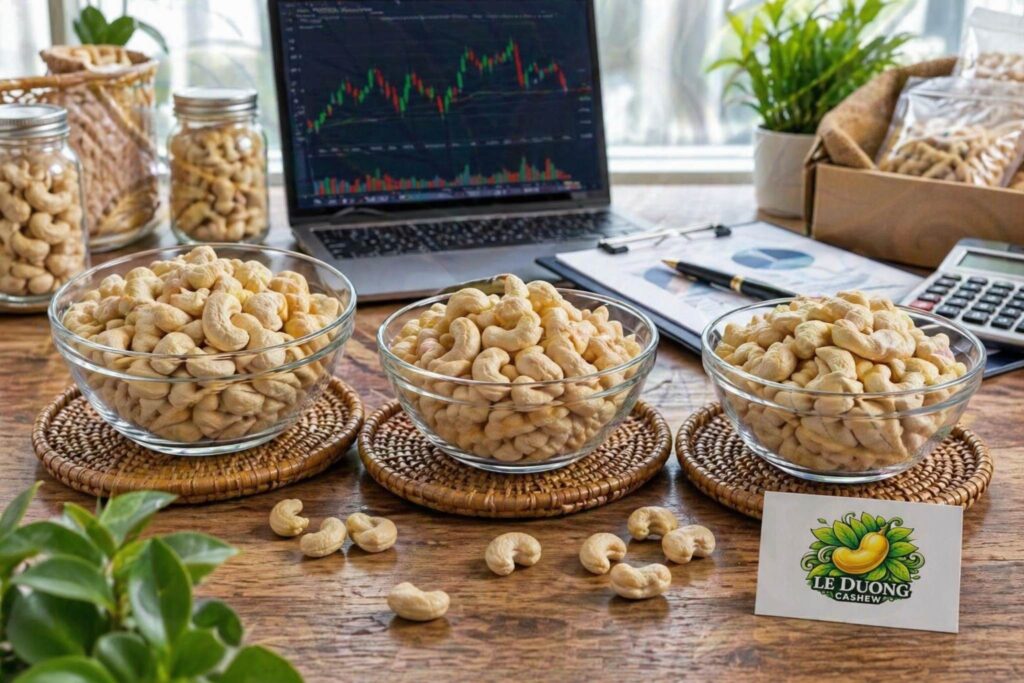
Recent market references show Vietnamese WW320 FOB prices around USD 7.1–7.4/kg in March 2026, while another April 2026 market update placed WW320 around USD 7.25/kg. When buyers sense short-term softness, many shift from immediate spot buying to negotiation mode. This can deepen the price correction, especially for standard-volume grades like WW320.
For professional buyers, the key question is not simply “How low can WW320 go?” but “Is this the right time to secure volume before the market rebounds after the holiday?”
Why WW240 Demand Is Rising
While WW320 is softening, WW240 is gaining attention. WW240 is a larger, more premium whole white cashew kernel grade, often selected for higher-end snack products, premium retail packs, gifting, hotel and restaurant channels, and gourmet F&B applications.
The current demand increase for WW240 is closely linked to the high price level of WW180. WW180 is an extra-large, premium-grade kernel. When WW180 remains too expensive for mass commercial programs, buyers often look for the next best alternative. WW240 becomes the logical replacement because it still delivers a large, attractive kernel size while offering better cost control than WW180.
This is especially important for brands that want to maintain a premium appearance without pushing retail prices too high. In many markets, consumers may not clearly distinguish between WW180 and WW240 in final packed products, but buyers, distributors, and category managers can immediately see the cost difference.
Commercial Implications for Importers
The current market creates three practical sourcing opportunities.
First, buyers of WW320 may have a short window to negotiate better prices before post-holiday demand returns. WW320 remains the workhorse grade for global cashew trade, so any sharp decline can attract quick buying from importers who need stable volume.
Second, buyers targeting premium snack channels may consider WW240 as a strategic substitute for WW180. It protects product appearance while reducing exposure to the highest-priced grade.
Third, food manufacturers may benefit from diversifying grade allocation. Instead of relying only on one grade, a more balanced procurement plan could include WW320 for mainstream SKUs, WW240 for premium lines, and broken or split grades for processing applications such as bakery, sauces, cashew butter, dairy alternatives, and confectionery.
 Vietnam’s Advantage in This Market
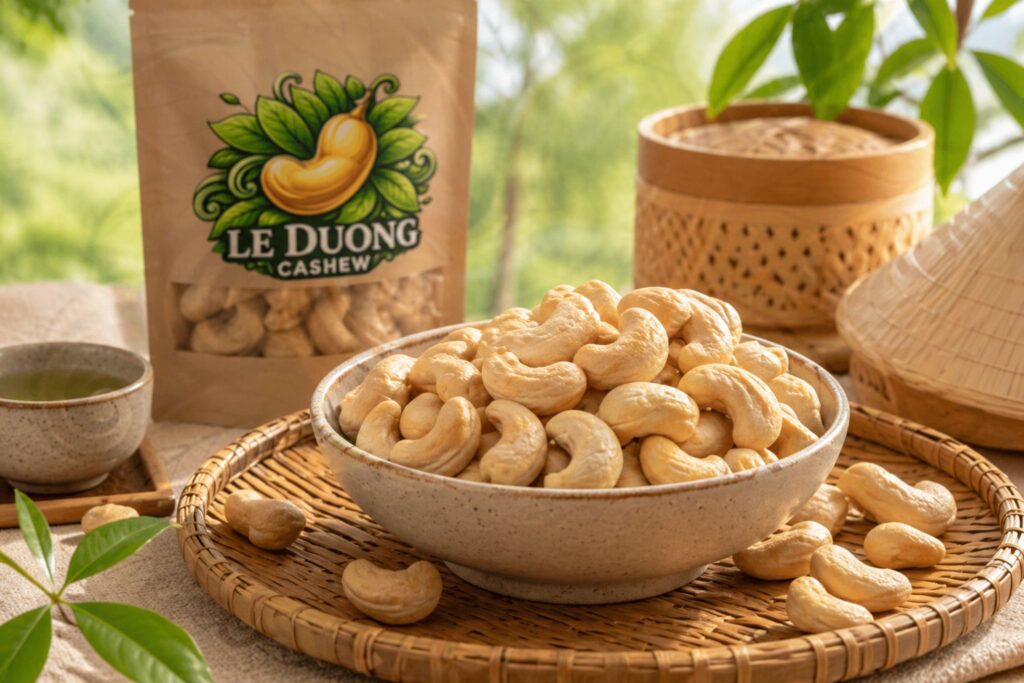
Vietnamese cashew suppliers are well positioned in this situation because they combine processing capacity, export experience, flexible grade availability, and established quality control. Vietnam’s processed cashew exports also showed strong momentum in early 2026, with January processed cashew kernel exports reportedly reaching 65,000 tons and USD 434 million.
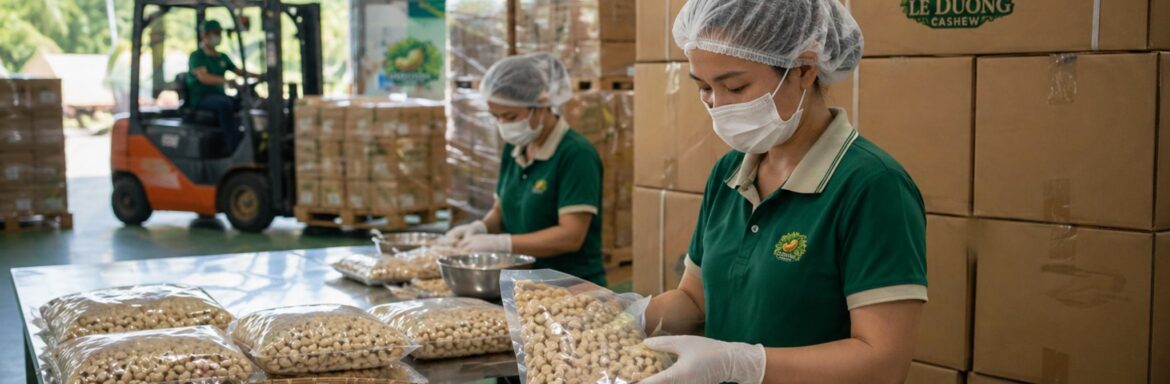
For international buyers, this matters because price is only one part of procurement. Reliable packing, moisture control, kernel grading accuracy, food safety compliance, container loading experience, and shipment documentation are equally important.
Le Duong Cashew supports global buyers with a practical sourcing approach: stable Vietnamese supply, suitable grade consultation, commercial flexibility, and export-focused quality standards. In a market where WW320 is correcting and WW240 is heating up, buyers need more than a price list. They need a supplier who understands timing, grade substitution, and end-use value.
Buying Strategy Before April 30 and May 1
For buyers currently watching the market, the smartest move is to separate short-term emotion from long-term procurement needs.
If your business uses WW320 regularly, the current price drop may be a good opportunity to cover near-term demand. Waiting too long may expose you to post-holiday restocking pressure.
If your premium product line normally uses WW180 but the price is too high, WW240 deserves serious consideration. It can help maintain a premium look while improving margin control.
If your company serves multiple channels, this is the right moment to review your grade mix. A flexible combination of WW320, WW240, and processing grades can help reduce cost risk while supporting different product positions.
In the cashew industry, the best buyers do not only chase the lowest price. They secure the right grade, from the right origin, at the right time. As the Vietnam holiday period approaches, the divergence between falling WW320 prices and rising WW240 demand may create one of the most interesting buying windows of the season.