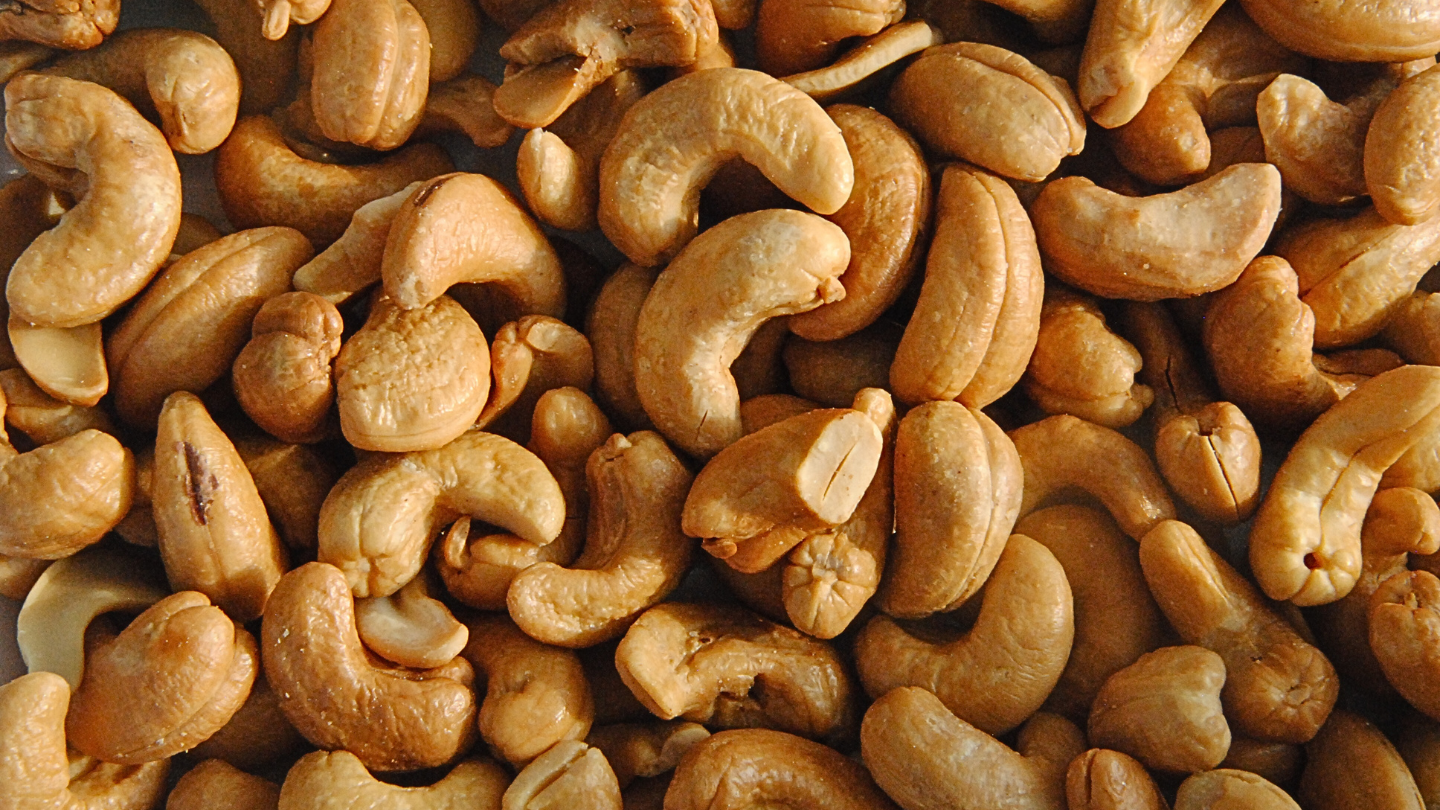

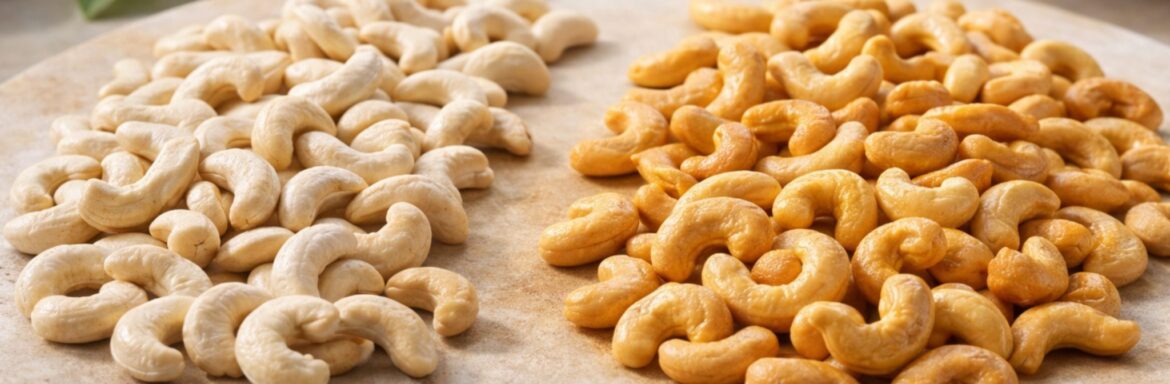
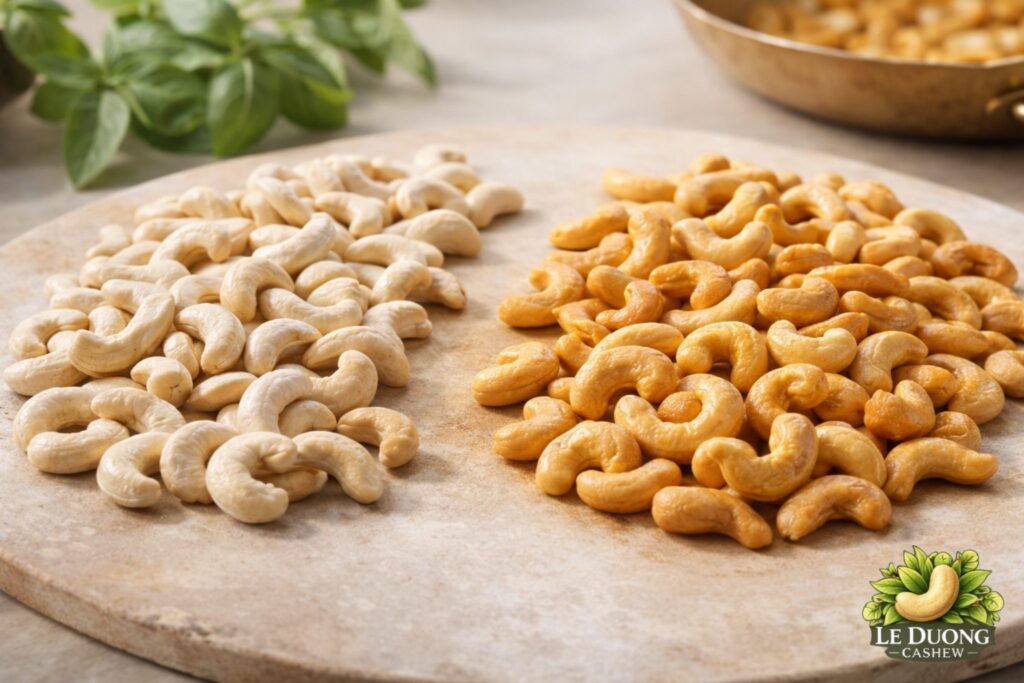
Cashew kernels brown during frying mainly because of non-enzymatic browning, especially the Maillard reaction. This happens when naturally present amino acids react with reducing sugars under heat, creating the golden-to-brown color and roasted flavor buyers expect. FDA guidance on heat-processed foods also notes that this reaction becomes more active at elevated temperatures and lower moisture levels.
Cashew Kernels Brown Unevenly During Frying
In practical cashew processing, temperature is the first major driver. The higher the frying temperature, the faster browning develops. Even a small rise above the ideal process window can shift kernels from light golden to dark brown, especially on split pieces or thin grades. Heating time works the same way: longer exposure means deeper color development and a higher risk of over-browning. Reviews on Maillard chemistry consistently identify temperature and time as core control factors.
The second technical cause is moisture loss. As water evaporates from the kernel surface during frying, conditions become more favorable for browning reactions. Recent reviews note that lower water content or low water activity can accelerate Maillard-driven color formation, while higher moisture slows it down. For cashew processors, this means pre-drying level and final kernel moisture have a direct effect on fry color.
Why Cashew Kernels Brown Unevenly During Frying Key Technical Causes
A third factor is the kernel’s natural composition. Different lots may contain different levels of reducing sugars, free amino compounds, and residual surface moisture. That is why two batches fried under the same settings can still show different color outcomes. Storage history can also matter, because raw material condition influences how quickly a kernel reacts under heat.
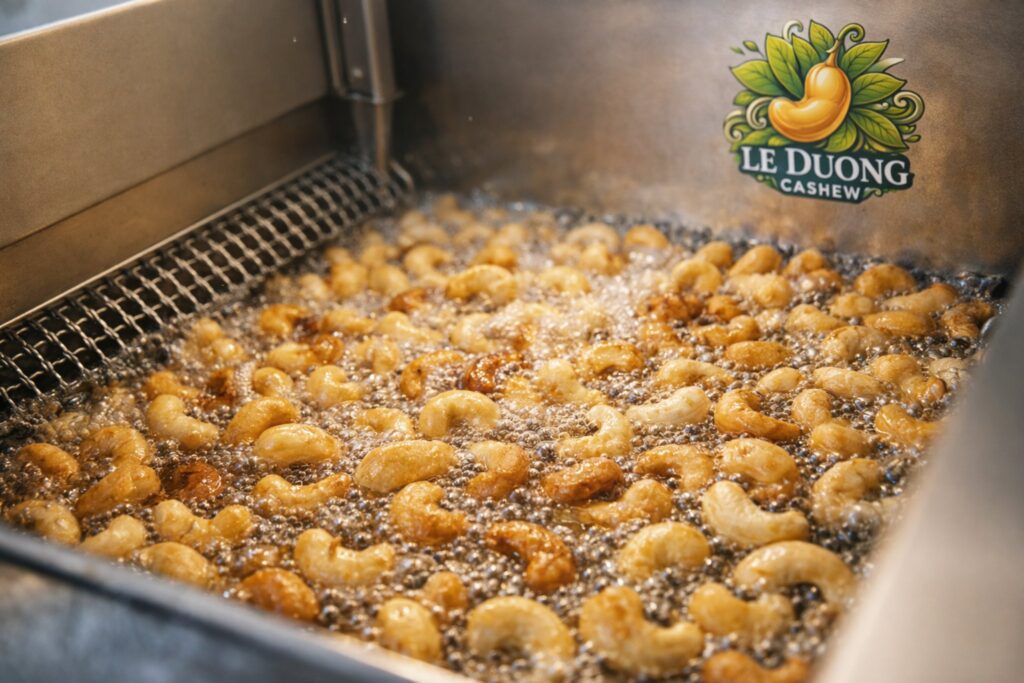
Another important cause is frying oil condition. Fresh, stable oil usually supports cleaner color development, while degraded oil can intensify darkening and create less uniform appearance. Scientific reviews on frying oils show that oxidation, hydrolysis, and polymerization increase as oil is repeatedly heated, affecting product quality and surface color.
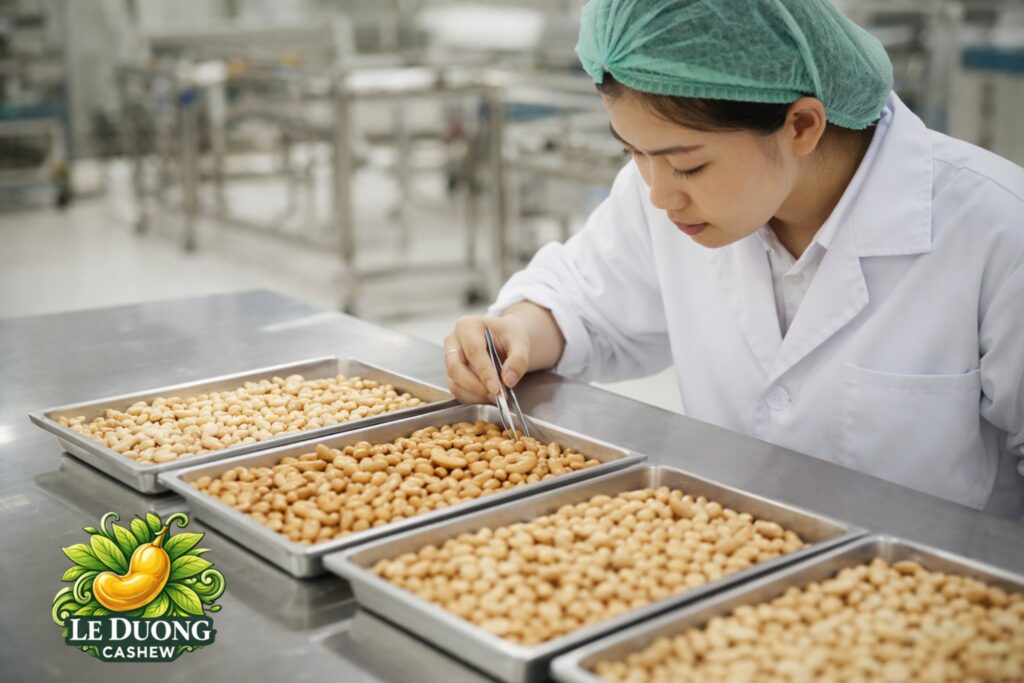
Why Cashew Kernels Brown Unevenly During Frying
For importers and food manufacturers, the takeaway is simple: browning is not just a visual issue. It reflects process control, raw material consistency, and oil management. Reliable Vietnamese suppliers such as Le Duong Cashew can reduce color variation by controlling kernel grading, moisture, and frying parameters with export-focused quality standards. In global F&B applications, that consistency matters for snack brands, private label packs, and ingredient buyers who need stable appearance, taste, and shelf performance..